AI progress note generators can save mental health professionals hours of documentation time while ensuring accuracy and compliance. These tools use AI to create structured therapy notes, integrate with EHR systems, and prioritize data security. Here’s a quick look at the top 5 options:
- TheraPulse: Speeds up documentation with its Session Scribe feature, creating notes in 60 seconds. Pricing starts at $29/month for 30 sessions.
- Mentalyc: Ideal for hybrid care models, with telehealth integration and customizable templates.
- Clinical Notes AI: Offers real-time transcription and automated consent management for fast EHR submissions.
- Lindy: Focuses on security and customization, using HL7 and FHIR protocols for seamless integration.
- Noterro: Combines note generation with practice management tools, using a flexible credit-based pricing model.
Quick Comparison
| Tool | Starting Price | Key Features | Best For |
|---|---|---|---|
| TheraPulse | $29/month (30 sessions) | Live transcription, customizable notes | Solo practitioners, small practices |
| Mentalyc | Custom pricing | Telehealth integration, consent forms | Mid-sized practices |
| Clinical Notes AI | Custom pricing | Real-time transcription, EHR integration | Healthcare organizations |
| Lindy | Custom pricing | Note automation, security compliance | Multi-provider practices |
| Noterro | $0.01/credit (300 free) | Practice management tools, scheduling | Small-to-mid practices |
These tools not only reduce time spent on documentation but also improve workflow efficiency and ensure compliance with HIPAA standards. Choose the one that fits your practice size, workflow, and budget.
1. TheraPulse
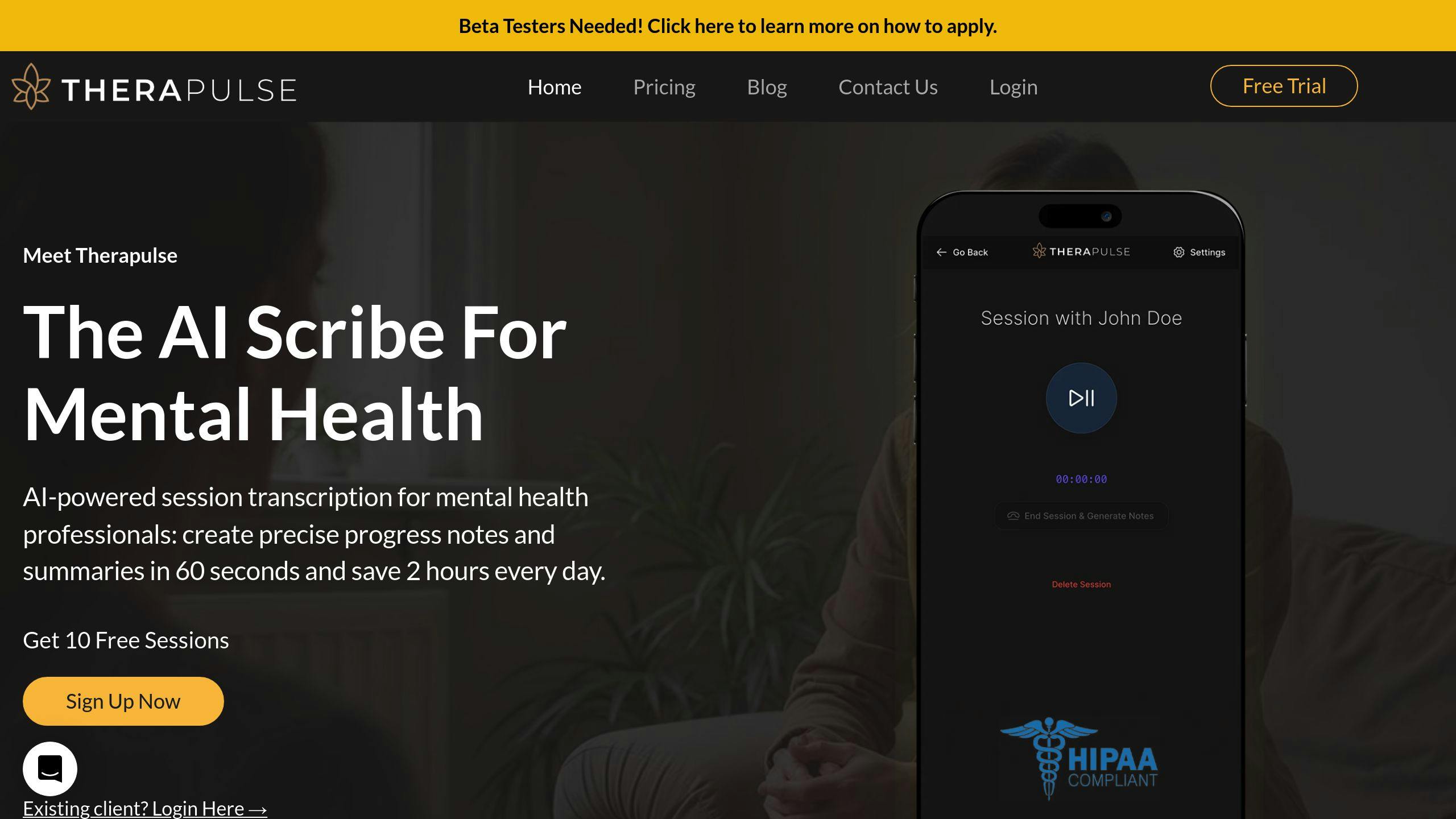
TheraPulse is a tool designed to simplify documentation for mental health professionals, saving them about 2 hours a day on paperwork [3]. It uses AES 256-bit encryption to secure data and relies on its own AI models in a controlled environment, avoiding external AI services [4].
The standout feature, Session Scribe, creates detailed progress notes from therapy recordings in just 60 seconds. It works for both individual and couples sessions, combining speed with strong security measures – ideal for practices that need efficient, compliant solutions.
Key Features:
- Integration with EHR systems
- Customizable templates (SOAP, DAP, BIRP)
- Secure data handling with immediate audio deletion
- Real-time access to patient data and session notes
Pricing starts at $29/month for 30 sessions, with premium plans offering extras like the NeuroSearch Chatbot. New users can also try out the platform with 10 free sessions.
One of TheraPulse’s defining qualities is its strict approach to data privacy. The platform processes audio solely for transcription and deletes it immediately afterward, ensuring top-level security [4]. This focus on privacy, paired with its feature-rich design, makes it a strong choice for modern mental health practices.
That said, while TheraPulse shines in efficiency and security, other tools like Mentalyc may be better suited for specific practice requirements.
2. Mentalyc
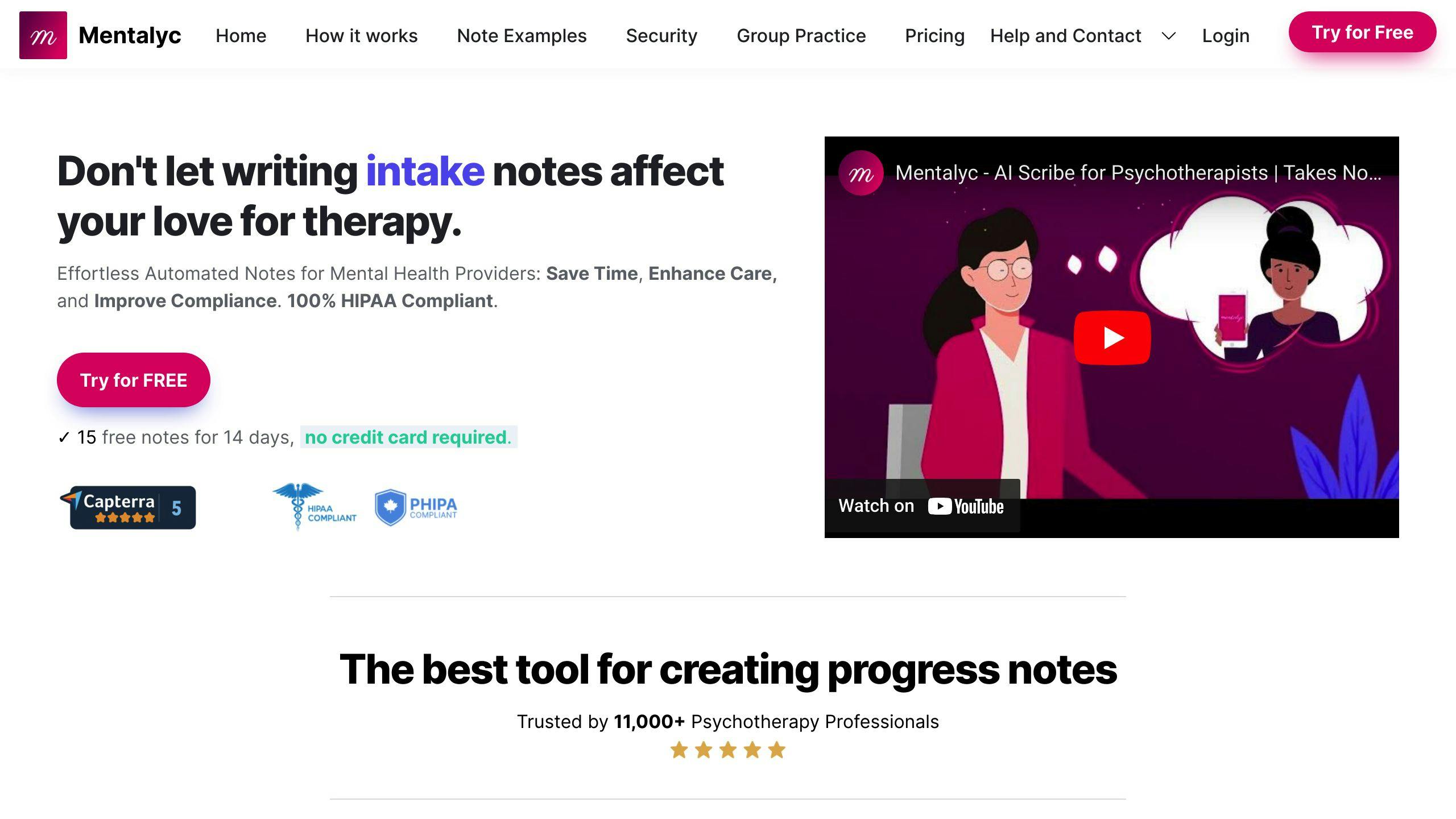
Mentalyc provides an AI-driven tool designed to simplify documentation for mental health professionals. Using HIPAA-compliant transcription technology, it converts therapy sessions into detailed progress notes, ensuring accuracy and compliance [5].
One of its key features is a built-in recorder that works for both in-person and virtual sessions. It supports major telehealth platforms like Zoom, Teams, and Google Meet, making it a great fit for practices offering hybrid care models [7].
To keep data secure, Mentalyc employs encryption, authentication, and consent management, all aligned with HIPAA standards [5]. It also integrates with EHR systems, either through direct note transfers or API options for larger organizations [6][7].
The platform’s AI organizes therapy conversations into clinically relevant notes, saving time and boosting accuracy [5]. Additionally, its consent form templates help maintain legal compliance when recording sessions [7].
Mentalyc stands out for its seamless telehealth integration and flexible recording features, making it ideal for practices that need adaptable documentation solutions. While TheraPulse focuses on immediate audio deletion and other specialized tools, Mentalyc shines in its ability to support both telehealth and in-person care workflows.
Though Mentalyc is strong in telehealth and flexibility, other platforms, like Clinical Notes AI, offer their own unique benefits.
3. Clinical Notes AI
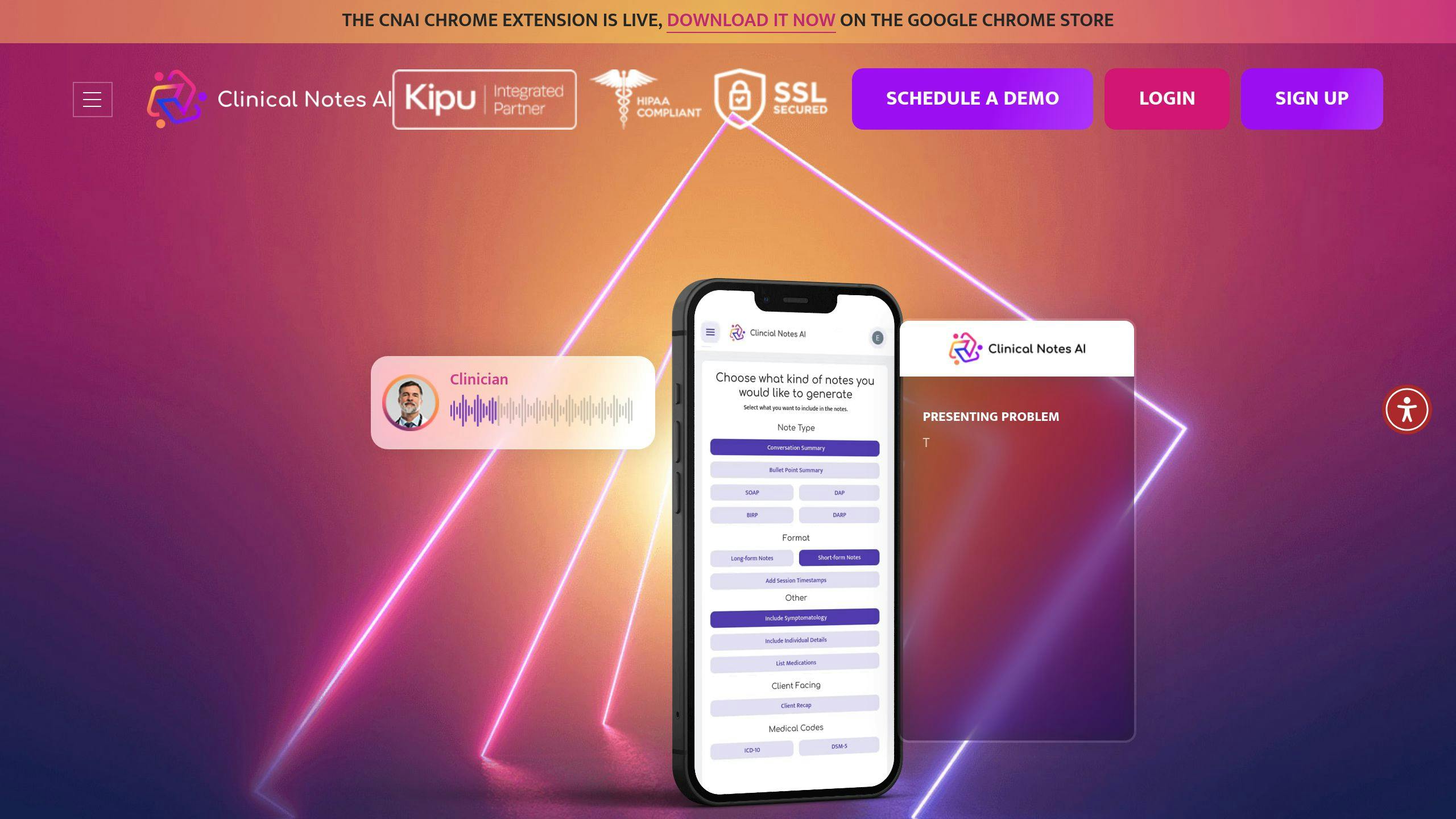
Clinical Notes AI is designed to ease administrative tasks with HIPAA-compliant documentation tools [8]. Its standout feature is real-time transcription, allowing EHR submissions in under two minutes after a session ends. The platform also supports customizable note formats, such as SOAP notes, that integrate easily with existing systems [8][9][10].
One key feature is its automated consent management system. This tool activates consent scripts during live sessions and simplifies onboarding paperwork [8]. By combining automation with flexible note customization, the platform helps practices stay compliant while improving daily workflows.
To ensure ethical AI use, Clinical Notes AI collaborates with experts to uphold the trust between therapists and patients [8]. For clinicians feeling the strain of burnout, its efficient documentation process offers relief, giving mental health professionals more time to focus on patient care while keeping thorough records [10].
While Mentalyc shines with telehealth integration, Clinical Notes AI sets itself apart with fast EHR submissions and automated consent tools. For practices exploring other options, tools like Lindy provide solutions tailored to specific needs.
4. Lindy
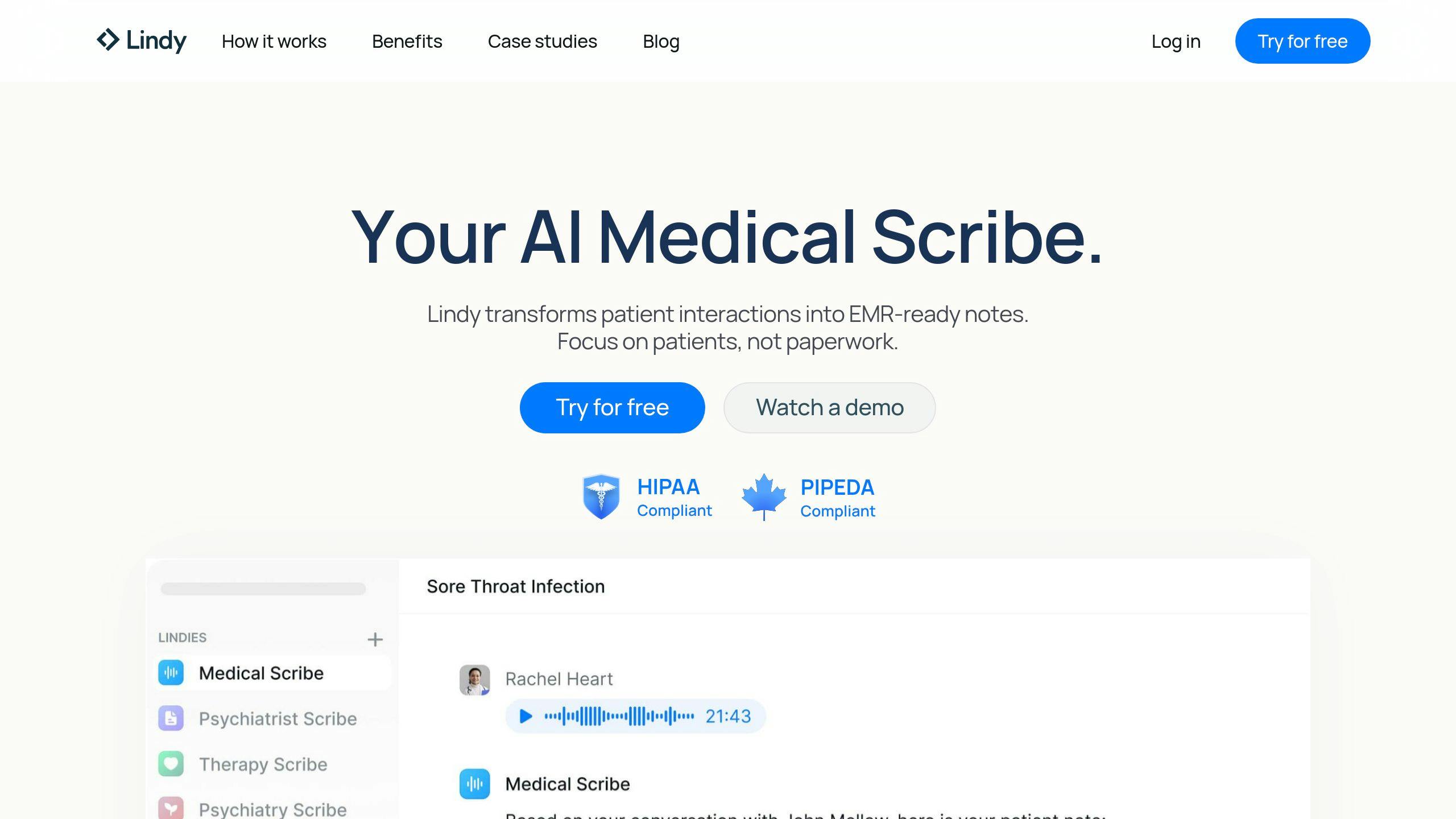
Lindy is SOC 2 Type II certified, ensuring strong data protection through continuous monitoring and compliance checks [12].
The platform allows providers to tailor workflows by duplicating and modifying note templates to meet specific charting needs [11][13]. This customization helps clinicians maintain consistent documentation while addressing the unique demands of different specialties and practices.
Lindy uses HL7 and FHIR protocols for real-time data exchange, offering reliable connectivity with telehealth platforms and EHR systems [14]. This integration simplifies documentation processes and supports better patient care.
Designed to grow with multi-provider practices, Lindy automates transcription to save time and improve patient interactions [14]. By reducing administrative tasks, clinicians can dedicate more attention to their patients.
Beyond HIPAA compliance, Lindy also meets PIPEDA standards, catering to Canadian healthcare providers [12].
The platform includes detailed guides and tutorials to help users customize templates and maximize the benefits of its AI tools.
While Lindy stands out for its security and customization features, Noterro provides a simpler solution for AI-powered progress notes, especially for smaller practices.
sbb-itb-8e8938b
5. Noterro
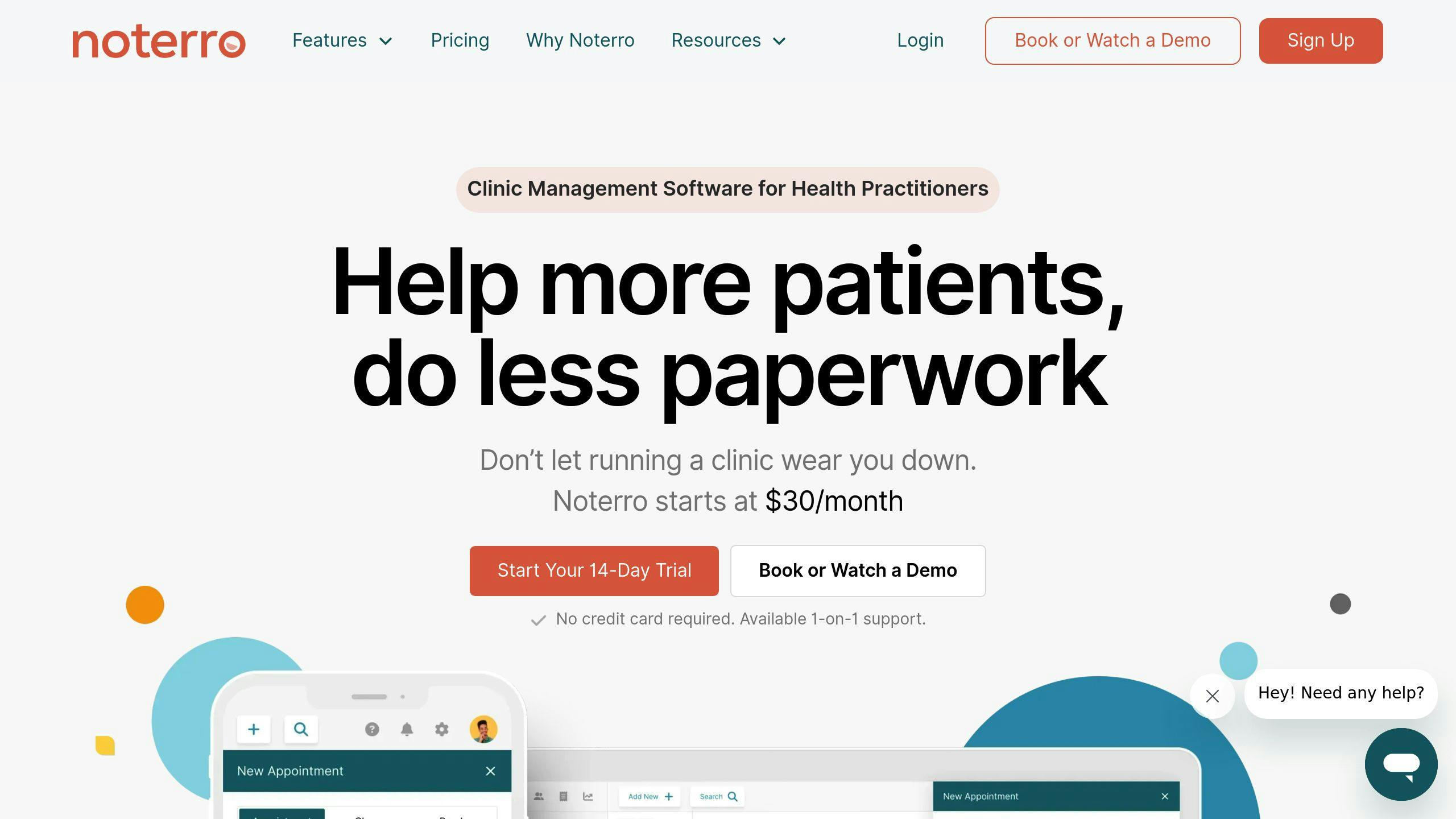
Noterro stands out by combining AI-driven note generation with practice management tools, offering a complete solution beyond just documentation. Its Noterro Scribe feature uses advanced AI to transcribe practitioner-patient interactions in real-time, making note-taking faster and more efficient [17].
The platform prioritizes security with features like a Business Associate Agreement (BAA) for covered entities and employs DevSecOps for backups and threat monitoring [15]. For practices looking to switch systems, Noterro simplifies migration from platforms like DrChrono through CSV exports [16].
Noterro uses a credit-based pricing model for transcription services. Transcriptions cost 16 credits per minute, and clinics are given 300 free credits to try the platform. Additional credits can be purchased for $0.01 each [17].
Key features include:
- Customizable note templates and consent forms
- Online booking and scheduling tools
- Secure file storage [19]
The customizable note templates are fully integrated with the platform’s practice management tools, helping small-to-mid-sized practices streamline their workflows [15]. This integration allows providers to spend more time with patients while maintaining accurate and detailed notes.
Noterro’s all-in-one approach makes it a strong choice for healthcare providers looking to consolidate their digital tools and improve efficiency.
Feature Comparison Table
Here’s a detailed comparison of the top 5 AI progress note generators, focusing on pricing, key features, and compliance standards:
| Feature/Tool | TheraPulse | Mentalyc | Clinical Notes AI | Lindy | Noterro |
|---|---|---|---|---|---|
| Starting Price | $29/month (30 sessions) | Custom pricing | Custom pricing | Custom pricing | $0.01/credit (300 free) |
| Session Limits | 30-150/month | Unlimited | Custom | Custom | Pay-per-use |
| Note Formats | SOAP, DAP, BIRP | Customizable | Standard formats | Customizable | Customizable |
| Key Features | Live transcription, AI notes, NeuroSearch, Session tracking | Live transcription, Templates, Analytics | AI notes, Templates, EHR integration | Note automation, Practice tools, Client portal | Live transcription, Scheduling, Practice tools |
| HIPAA Compliance | Yes | Yes | Yes | Yes | Yes + BAA |
| Best For | Solo practitioners and small practices | Mid-sized practices | Healthcare organizations | Multi-provider practices | Small-to-mid practices |
All these tools meet HIPAA compliance standards, with Noterro offering additional security through a BAA and DevSecOps [15]. TheraPulse stands out with its NeuroSearch Chatbot in premium plans, while Noterro offers a flexible credit-based model, charging 16 credits per minute for transcription [17].
This table helps you pinpoint the best AI progress note generator that aligns with your practice’s specific requirements.
Conclusion
AI progress note generators have come a long way, cutting documentation time by up to 20% and boosting productivity by 10% [1][2]. These tools ease the burden of after-hours work, freeing up more time for clinicians.
When selecting an AI progress note generator, keep these key points in mind:
- Practice Size Compatibility: Pick a tool that matches the size and needs of your practice.
- Workflow Integration: Look for a solution that fits seamlessly into your current processes without requiring major changes.
- Security Standards: Ensure the platform meets HIPAA requirements and has strong data protection measures.
Different platforms cater to various needs. For instance, TheraPulse’s NeuroSearch is a great fit for solo practitioners, while Noterro’s credit-based system works well for expanding practices. Your decision should be guided by your practice’s unique needs, budget, and future plans.
These tools don’t just save time – they improve the accuracy of clinical documentation, support better patient care through detailed records, and help reduce compliance risks [20][1][2]. As mental health practices continue to adopt digital tools, AI-powered solutions are making practice management more efficient and effective.
Investing in an AI progress note generator isn’t just about saving time. It’s a strategic move that can positively impact both the administrative and clinical sides of your practice. With accurate and thorough records, patient care improves, and your workflow becomes smoother. Next, let’s dive into some frequently asked questions about these tools.
FAQs
What is the best AI for writing therapy notes?
The best AI for therapy notes depends on factors like accuracy, reliability, and how well it fits into your workflow. For example, Lindy boasts over 99% accuracy rates [18], though its performance may vary in more complex sessions. To make the right choice, focus on key considerations like accuracy and how easily the tool integrates with your existing systems [21].
Here are two important factors to keep in mind when choosing an AI progress note generator:
- Specialized Training: Look for tools trained in mental health terminology, and always double-check AI-generated notes for accuracy [22].
- Integration: Make sure the tool connects smoothly with your current EHR system [18].
For solo practitioners, TheraPulse offers customizable note formats and efficient transcription tools, making it a strong option. On the other hand, Lindy’s high accuracy rates are ideal for practices handling complex documentation. Each platform has its strengths, so the best choice depends on your specific workflow and needs. The right tool ensures your documentation is both efficient and accurate.