
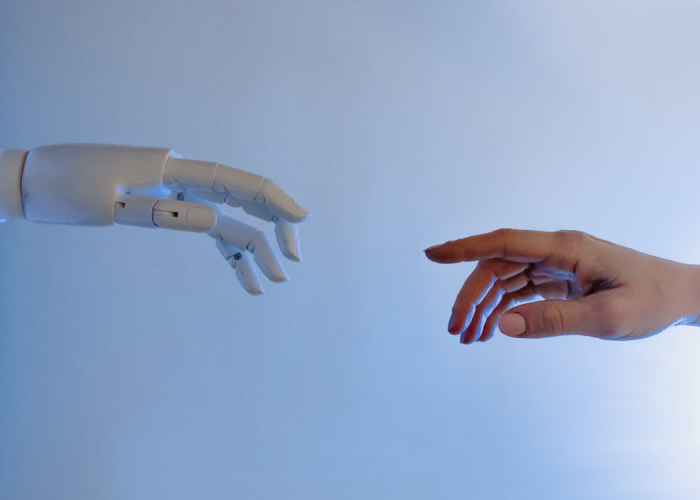
Artificial intelligence has rapidly advanced, especially in writing, with tools like ChatGPT producing essays and articles that closely resemble human work. This surge in AI-generated content raises an important question for students, educators, and professionals: can AI tools accurately distinguish between AI-written and human-written material? Understanding the differences between AI and human writing is crucial, as AI tends to produce more structured and neutral content, while human writing reflects unique styles and emotional nuances.
AI detection tools analyze linguistic patterns to identify AI-generated text, but their accuracy varies widely. Many struggle with edited AI drafts or sophisticated AI models that mimic human quirks, leading to false positives or missed detections. An effective AI text detector online can help, but relying solely on these tools isn’t enough as AI technology evolves rapidly. Instead, ethical use and transparency about AI involvement in writing remain vital for maintaining trust in academic and professional settings.
Key Differences Between AI-Generated and Human Writing
Understanding how AI and human writing differ is the first step to grasping why detection tools exist and how they work.
Language Patterns and Style
AI-generated content tends to follow highly structured patterns. It favors clear, logical sentence construction and often avoids unusual or complex phrasing. Human writing, on the other hand, tends to be more varied and sometimes inconsistent—reflecting emotions, spontaneous thoughts, and personal style.
Creativity and Nuance
AI uses patterns learned from massive datasets, but it lacks genuine creativity or lived experience. As a result, AI writing can sound balanced and neutral but may miss the subtle nuances or emotional depth humans naturally include.
|
Aspect |
AI-Generated Content |
Human Writing |
|
Sentence Structure |
Predictable, balanced, and formal |
Varied, sometimes informal or quirky |
|
Vocabulary |
Safe and common words |
Unique, sometimes unconventional |
|
Tone |
Neutral and consistent |
Emotional shifts and personal voice |
|
Error Type |
Occasional factual inaccuracies |
Typos, slang, grammar quirks |
-
When writing, inject your personality. Use examples from your own experience and don’t shy away from stylistic quirks—this makes your text more “human” and harder to be mistaken for AI.
How AI Content Detectors Operate
An AI content detection tool uses advanced technology to analyze text and decide if it was generated by a human or AI.
The Technology Behind Detection
Most AI detectors rely on machine learning algorithms trained to recognize linguistic fingerprints typical of AI writing. These include repetitive phrasing, sentence length uniformity, and word choice patterns that differ subtly from human text.
-
GPTZero: Designed specifically for spotting AI-generated academic work.
-
Turnitin: A classic plagiarism checker adding AI detection features.
-
Originality.AI: Combines plagiarism detection with AI content detection for web publishers.
How Detection Scores Work
Detection tools usually provide a probability score indicating the likelihood that a text is AI-generated. For example:
|
Score Range |
Interpretation |
|
0-30% |
Likely human-written |
|
31-70% |
Uncertain / needs review |
|
71-100% |
Likely AI-generated |
Limitations of Detection Tools
While AI detection accuracy has improved, no tool is perfect. One important issue is AI detector false positives, where perfectly human-written text is mistakenly flagged as AI-generated. This can happen when a writer’s style is unusually consistent or uses formal language typical of AI output.
-
If using AI tools to help with writing, avoid submitting AI text without revisions. Light edits, added personal insight, and varying sentence length can reduce the chance of false positives.
Challenges in Accurate Detection
Despite advances, detecting AI vs human-written content is complex and filled with challenges.
Human Editing and Blended Text
Many students and professionals edit AI drafts, blending human touches with AI-generated material. This “hybrid” writing is much harder for detection tools to classify correctly because it doesn’t fit neatly into either category.
AI’s Growing Sophistication
Newer AI models are trained to mimic human errors, vary sentence length, and add more natural phrasing. This evolution blurs the line between AI and human styles, reducing detection tool effectiveness.
Language and Context Limitations
Detection tools perform best with English text and standard academic styles. Non-English content or texts with heavy slang or jargon are often misclassified.
-
Edited AI text: Often escapes detection.
-
Advanced AI models: Reduce detectable markers.
-
Non-English text: Detection accuracy drops.
-
False positives/negatives: Still common in real-world use.
-
Always combine your research with your own analysis. Use AI as a tool, not a shortcut. This approach helps maintain academic integrity and reduces detection issues.
Future Outlook and Ethical Considerations
The debate over AI detection is just beginning, and the future holds both technological and ethical questions.
AI vs AI: An Ongoing Race
As AI models become more sophisticated, so do detectors. Developers constantly update AI content detection tools to catch subtler clues, creating an ongoing “arms race” between content generation and detection.
Ethics in Education and Publishing
Institutions are debating how to handle AI-generated content fairly. Transparency about AI use is becoming important to uphold trust without stifling innovation.
Is Perfect Detection Possible—or Desirable?
Given AI’s rapid evolution and human editing, perfect detection may never be feasible. Moreover, some argue that rather than policing AI use, the focus should shift to ethical guidelines on when and how to use AI responsibly.
-
Educators should update policies to reflect AI’s role and focus on teaching critical thinking and originality.
-
Students should use AI tools ethically, as aids—not replacements—for their own work.
-
Everyone should stay informed about the latest in AI detection technology and best practices.
Bottom Line
AI content detection tools have come a long way, but face ongoing challenges in distinguishing AI-generated content from human writing. Understanding the differences between these writing types, how detectors work, and their limitations helps students and educators navigate this complex landscape. With AI becoming a common part of the writing process, ethical use and transparency remain key. Instead of fearing AI detection tools, learning to use AI responsibly and creatively offers the best path forward.