
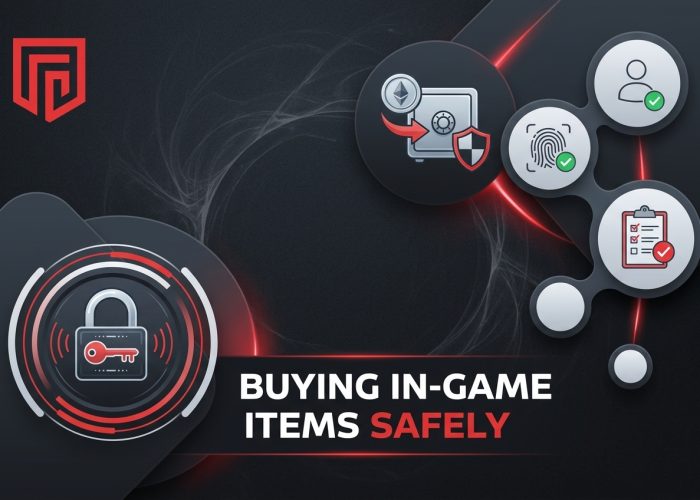
Gaming has quietly become one of the biggest targets for online scams. Wherever players spend real money on virtual goods, someone is waiting to take that money and deliver nothing. The market for trending game items moves fast and pulls in millions of buyers, which makes it fertile ground for fraud. A few habits will keep you on the safe side of it.
Consider how the newest viral hits work. A game like Steal a Brainrot explodes overnight, everyone suddenly wants the same rare characters, and demand outruns what the game hands out. That gap creates a resale market, and scammers love a hot resale market, because buyers in a hurry skip the checks they would normally make. The pressure to grab a trending item before the hype fades is exactly what fraudsters exploit.
The oldest trick is the direct deal that feels personal. A stranger in a Discord or a game chat offers a great price, asks you to pay first, and vanishes the moment the money lands. Screenshots of past trades prove nothing, since they are trivial to fake. Any arrangement that rests purely on trusting a stranger with no protection in place is a coin flip, and the odds are not in your favor.
Escrow is the single best defense, which is why it pays to use a marketplace built around it. If you want to visit a brainrot shop to pick up a rare item, a platform like Eldorado holds the buyer’s payment until the seller delivers and the buyer confirms, so neither side can walk off with both the goods and the cash. That structure removes the exact leverage a scammer needs. The middleman is the point, not an inconvenience.
Watch for the red flags that show up again and again. A deal far below the going rate is bait, not luck. A seller who pushes you to move the conversation off-platform is trying to escape the protections you rely on. Requests for your account password, your two-factor codes, or your recovery email are never legitimate, because no honest item transfer needs any of them. The moment someone asks, stop.
Protect the account itself while you are at it. Turn on two-factor authentication, use a password you do not reuse anywhere else, and treat any link promising free currency or items with suspicion, since those pages exist to harvest logins. Phishing aimed at gamers has grown sharper and now copies real storefronts closely, so slow down and read the address bar before you type anything sensitive.
One scam worth naming is the fake middleman. A con artist poses as a trusted go-between, offers to hold the trade to make it feel safe, then keeps both the payment and the item. It works because it copies the language of real protection while removing the actual protection. The defense is simple: use a real escrow platform rather than a person who claims to be one, and never accept a stranger volunteering to hold your money. If the safeguard lives inside someone you have to trust, it is not a safeguard at all.
Buying virtual goods does not have to be risky. Stick to platforms that hold funds in escrow, check a seller’s history before you pay, and treat any deal that rushes or pressures you as a warning rather than an opportunity. The players who get burned are almost always the ones who skipped a step in the excitement. Slow, boring caution is what keeps your money and your account where they belong.