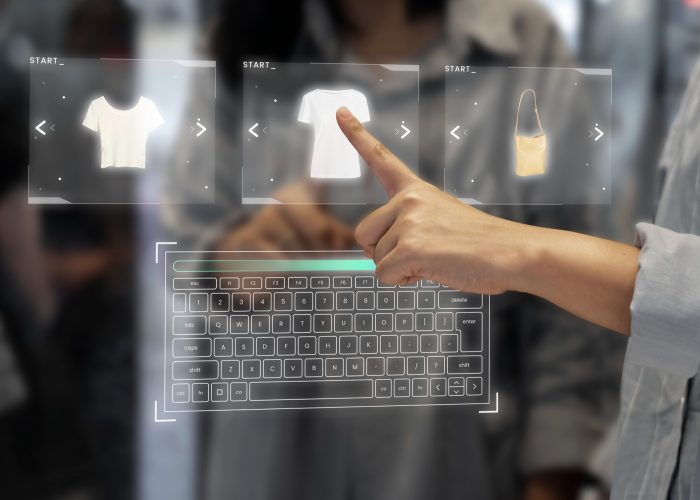
In the fast-evolving world of online shopping, augmented reality e-commerce examples are no longer futuristic novelties—they’re increasingly common tools that redefine how consumers interact with products before making a purchase. From trying on glasses virtually to placing a 3D model of a couch in your living room, AR is blurring the line between digital browsing and in-store experiences. But augmented reality is making a profound psychological impact on e-commerce buyers, influencing trust, engagement, and ultimately, purchase intent.
Building Trust Through Virtual Tangibility
One of the biggest hurdles in e-commerce has always been the lack of physical interaction with products. Shoppers can’t touch, feel, or try items like they would in a store, which naturally breeds hesitation. AR fills that sensory gap by offering a virtual substitute that feels surprisingly close to the real thing.
Take the example of beauty brands like Sephora, which uses AR for virtual makeup try-ons. Customers can see how a shade of lipstick looks on their face using their phone’s camera—this creates a sense of familiarity and assurance that a static image simply can’t provide. When buyers feel they “know” what they’re getting, they’re more likely to trust both the product and the brand.
This trust-building power of AR is deeply rooted in psychology. The technology taps into what researchers call perceived diagnosticity, or the degree to which a consumer believes the information they’re receiving is helpful in making a decision. When AR gives a shopper the opportunity to interact with a product in a simulated real-world context, that product feels more “real,” reducing the uncertainty that often kills conversions.
Enhancing Engagement Through Interaction
Beyond building trust, AR also excels at keeping customers engaged—something that’s increasingly difficult in an attention-deficient online environment. Unlike static product listings, AR invites participation. Shoppers aren’t just scrolling; they’re rotating a product, zooming in, or virtually trying it on. It’s interactive, it’s immersive, and it turns a passive experience into an active one.
This higher level of engagement is not just anecdotal. Studies show that interactive experiences can trigger a psychological state known as flow—a deep focus where people lose track of time because they’re fully absorbed in the activity. Flow is associated with more positive brand perceptions and longer time spent on site, which are crucial metrics in e-commerce.
IKEA’s AR app, for example, allows customers to project furniture into their home to see if it fits and matches their decor. This isn’t just a cool gimmick—it’s a way of giving shoppers agency and control. They’re not being told how a product might work for them; they’re experiencing it for themselves. That sense of control and exploration activates emotional investment, making the buyer more likely to follow through with a purchase.
Driving Purchase Intent with Confidence
When you combine increased trust and deeper engagement, the result is often higher purchase intent. AR makes buyers feel more confident in their choices, and confidence is a key driver in converting interest into action. This is especially valuable during the product search process, when customers are comparing options and looking for enough information to make an informed purchasing decision.
Let’s say you’re shopping for sunglasses online. Without AR, you might hesitate—worried about how they’ll fit your face. But with virtual try-on tech, you can see exactly how each pair looks on you in real-time. The uncertainty fades, and you’re more likely to hit “buy now” rather than abandon your cart.
In psychological terms, AR addresses what’s known as cognitive dissonance—the discomfort we feel when we’re unsure about a decision. By offering more clarity and information in a highly personalized way, AR reduces this internal conflict. The product feels like a safer bet, the purchase more rational.
Moreover, AR creates what marketing experts call a vividness effect. Vivid experiences—those that are emotionally engaging and easy to imagine—tend to be more persuasive. When AR helps a shopper visualize themselves using a product in their daily life, it becomes easier to picture owning it. That imagined ownership often leads to actual ownership.
Challenges and the Road Ahead
Of course, AR isn’t a magic bullet. It requires investment in technology, thoughtful UX design, and the right fit for the right product. Poorly executed AR can feel gimmicky or frustrating, which may hurt trust rather than build it.
There are also psychological considerations. Not all users are comfortable with AR yet—some find it invasive or confusing. Brands must strike a balance between innovation and ease of use, making sure the technology enhances rather than distracts from the shopping experience.
Yet, as AR becomes more accessible and expectations shift, its influence on buyer psychology is only expected to grow. Younger consumers, particularly Gen Z and millennials, are already accustomed to AR through social media filters and mobile games. For them, using AR to shop feels intuitive rather than extraordinary.
Final Thoughts
The rise of augmented reality e-commerce examples is doing more than just decorating product pages—it’s fundamentally changing how buyers think, feel, and behave during the shopping process. By enhancing trust, deepening engagement, and increasing purchase confidence, AR is rewriting the rules of digital retail psychology.
As more brands explore AR solutions and as consumers grow more comfortable with immersive tech, the question will no longer be if AR influences buying decisions—but how deeply. For forward-thinking businesses, understanding the psychological power of AR is not just an edge—it’s a necessity.