
How Casino Gaming Brands Protect Their Platforms from Cyber Threats
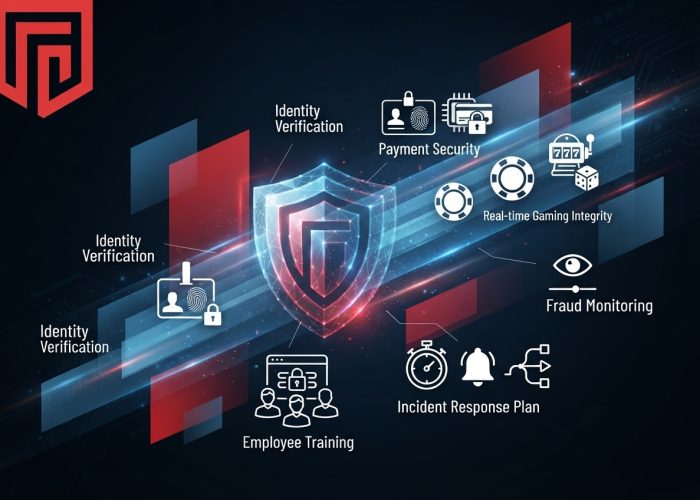
Online casino platforms combine personal identities, payment systems, location data and real-time gaming services in one digital environment. That makes cybersecurity fundamental to maintaining customer confidence, regulatory approval and uninterrupted operations. Casino brands consequently rely on layered security, combining technical controls with identity verification, fraud monitoring, employee training and incident-response planning.
Protecting Data in Transit and at Rest
Encryption is one of the first layers of protection. Casino platforms use encrypted connections to protect information travelling between a player’s device and company servers. Sensitive information stored within databases should also be encrypted so that it is less useful if an attacker gains unauthorized access.
Payment information receives additional safeguards. Operators and their payment providers generally work within Payment Card Industry Data Security Standard requirements, which establish controls for handling card details. Tokenization can replace a card number with a non-sensitive reference, reducing the number of systems that handle the original information. Access to production databases is restricted through role-based permissions, logging and separation of duties.
No reputable brand should claim that encryption makes a service invulnerable. It reduces exposure, but it cannot compensate for stolen passwords, insecure software or an employee persuaded to approve a fraudulent request.
Defending Player Accounts
Account takeover is a particularly important threat because casino accounts may contain balances, personal details and linked payment methods. Attackers commonly use passwords stolen from unrelated data breaches, automated credential-stuffing tools and convincing phishing messages.
Multi-factor authentication provides an additional barrier by requiring something beyond a password, such as a temporary code. Platforms can also monitor unfamiliar devices, changes in location, repeated login failures and unusual withdrawal behavior. A login that appears ordinary in isolation may become suspicious when combined with a new device and an immediate attempt to change payment details.
DraftKings, for example, offers stronger authentication involving a temporary code and advises customers to review login history and financial transactions for unexpected activity. New players exploring DraftKings’ range of casino games and more should enable available authentication protections, use a unique password and access the service only through the official application or domain.
Identity, Age and Location Checks
Cybersecurity in casino gaming overlaps heavily with regulatory compliance. Know Your Customer checks help operators verify that an account belongs to a real person who meets the applicable age requirements. Depending on the jurisdiction and risk involved, verification may include identity documents, address information, database checks, biometric comparison and source-of-funds reviews.
These controls can limit underage participation, synthetic identities, payment fraud, multiple-account abuse and money laundering. Verification does not stop after registration. Ongoing systems may reassess risk when behavior changes, unusually large transactions occur or identity information no longer matches account activity.
Geolocation is another important control in regulated markets. A platform may need to establish that a player is physically present in a jurisdiction where the relevant product is permitted. Location checks can use device signals and network information while screening for attempts to disguise a user’s position.
Monitoring Transactions and Game Integrity
Casino security teams use real-time analytics to identify behavior that differs from normal activity. Examples include deposits from several unrelated payment methods, rapid movement of funds, coordinated accounts and repeated attempts to exploit promotional offers.
These systems use rules, statistical models and machine learning to produce risk scores. High-risk activity can trigger another identity check, a temporary withdrawal review or investigation by a specialist. Human supervision remains essential because automated systems can misunderstand legitimate travel, shared households and accessibility tools.
Operators must also protect game integrity. Random-number-generator titles require controlled software development, change management and independent testing. Live dealer products add video infrastructure and physical studio operations, while jackpots require accurate transaction records across participating games. Audit logs help investigators establish what happened when a dispute or technical incident arises.
Keeping Platforms Available
Cybersecurity is also about availability. Distributed denial-of-service attacks attempt to overwhelm servers with traffic, potentially preventing players from logging in or completing transactions. Casino brands address this risk through traffic filtering, cloud-based mitigation, load balancing and geographically distributed infrastructure.
Backups should be isolated from the main production environment so that ransomware cannot encrypt every usable copy. Operators also need tested recovery procedures, redundant payment routes and clear methods for reconciling player balances after disruption. Current industry assessments identify DDoS attacks, credential abuse, payment fraud, phishing and data exposure among the central risks confronting online operators.
Learning from Major Casino Attacks
The September 2023 cyberattacks involving MGM Resorts and Caesars Entertainment demonstrated that sophisticated technology can be undermined by social engineering. Attackers reportedly used information about employees to impersonate staff and manipulate support processes. MGM experienced widespread operational disruption, with the estimated impact reaching approximately $100 million.
The lesson extends beyond installing multi-factor authentication. Help-desk staff need robust procedures for password resets and enrolment of new authentication devices. Privileged access should be tightly limited, and unusual administrative actions should generate alerts. Network segmentation can also prevent one compromised identity from providing access to every part of the business.
Governance, Testing and Incident Response
Large gaming companies increasingly treat cyber risk as a board-level issue. An effective programme assigns responsibility to a security operations team, reports identified risks to senior leadership and maintains an incident-response plan covering containment, investigation, customer communication and regulatory notification.
DraftKings has publicly described a governance structure involving a security operations team led by its chief information security officer, an executive steering committee and board-level oversight. Its incident-response plan is reviewed annually internally and through third-party audits.
Casino brands also conduct vulnerability scanning, penetration testing, code reviews and supplier assessments. Third-party studios, identity vendors, customer-support services and payment processors can all create additional exposure, so contracts and technical integrations require continuing scrutiny.
Ultimately, secure casino gaming depends on defense in depth. Encryption, authentication and fraud analytics matter, but so do trained employees, carefully managed suppliers, tested backups and realistic incident exercises. Players contribute by using unique passwords, enabling stronger authentication and reporting suspicious messages promptly. No platform can eliminate every threat, but mature operators can reduce the likelihood of an incident and limit the damage when one occurs.