
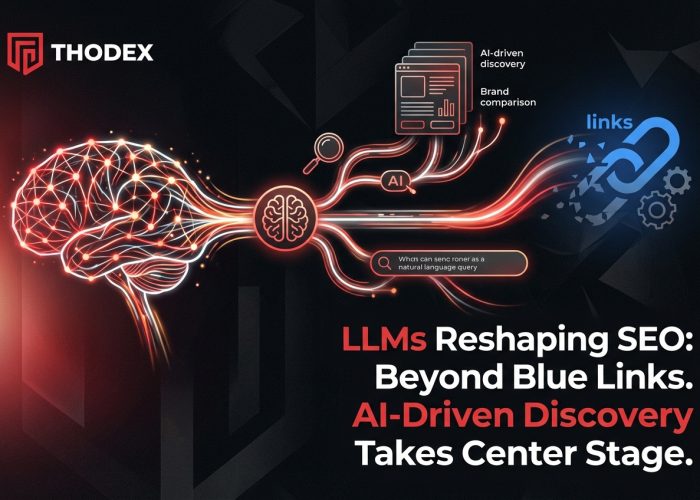
Search is no longer just about ranking blue links. As large language models (LLMs) become embedded into how people discover information, compare brands, and make decisions, the rules of SEO are shifting fast. Marketers who continue to optimize only for traditional search engines risk falling behind as AI-driven discovery takes center stage.
From AI overviews and conversational search to content summaries generated on the fly, LLMs are changing how visibility is earned. Understanding this shift isn’t optional anymore; it’s a competitive necessity.
The New Reality of AI-Driven Search
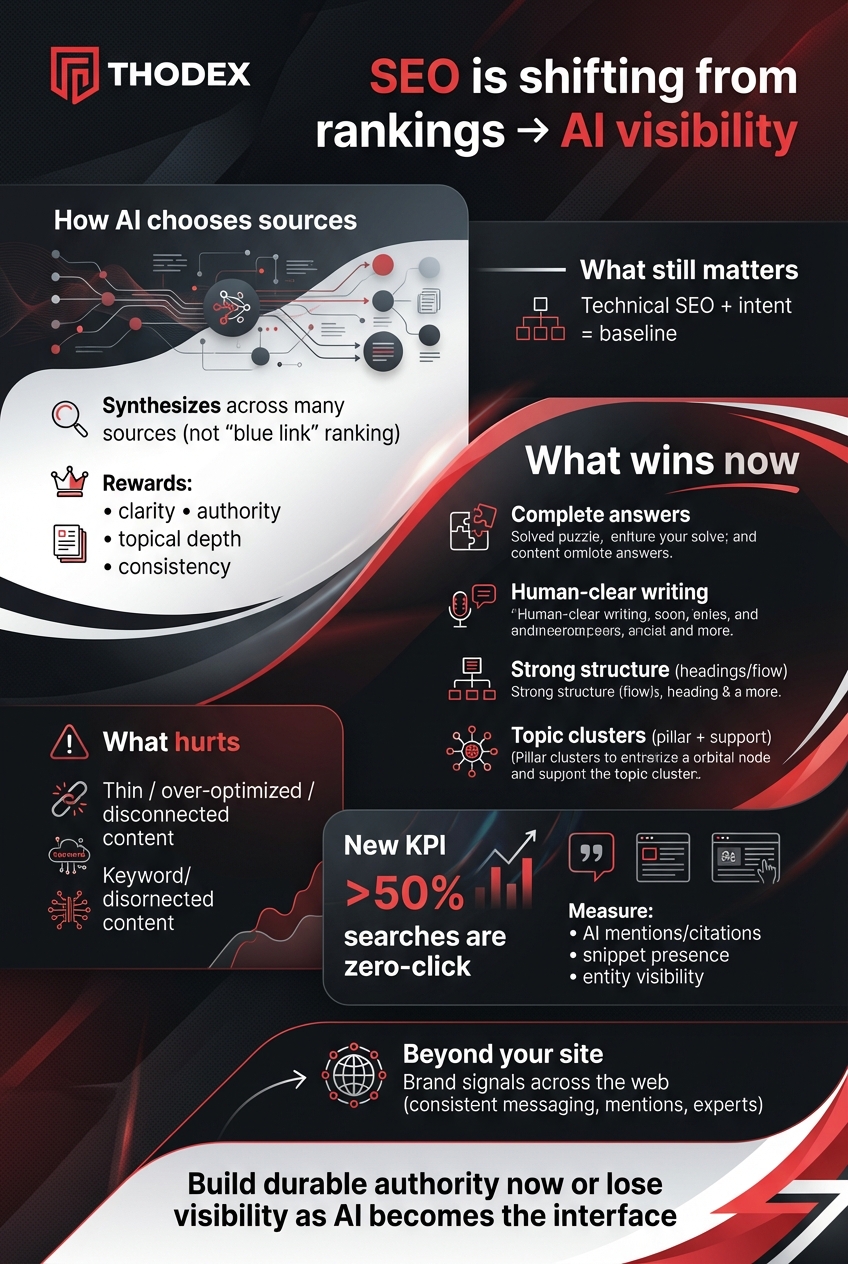
LLMs don’t “rank” content in the traditional sense. Instead, they synthesize information across multiple sources, looking for clarity, authority, topical relevance, and consistency. This means visibility is increasingly determined by how well your content communicates expertise, not just how well it targets keywords.
Search engines powered by AI aim to deliver direct answers, not lists of links. For marketers, this changes the goal from “ranking a page” to “being cited, referenced, or summarized by AI.” That shift impacts everything from content structure to brand positioning.
This is where LLM SEO strategies come into play, approaches specifically designed to help brands stay visible as AI becomes a dominant layer of search.
Why Traditional SEO Alone Isn’t Enough
Classic SEO tactics still matter. Technical health, crawlability, internal linking, and keyword intent remain foundational. But LLMs evaluate content differently than algorithms built purely on ranking signals.
AI models favor content that is:
-
Contextually complete rather than narrowly optimized
-
Written clearly for humans, not machines
-
Structured logically, with strong topical coverage
-
Consistent across multiple touchpoints
If your site answers a topic partially, vaguely, or inconsistently, AI systems are less likely to trust or surface it. This is why thin content, over-optimized pages, and disconnected blog posts are becoming liabilities rather than assets.
Visibility First — Beyond Traffic
One of the most important strategic shifts for SEO in an AI-dominated landscape is how success is measured. With zero-click searches rising, where users get answers directly in the search experience without ever clicking through to a website, traditional metrics such as organic traffic and click-through rate (CTR) are no longer sufficient indicators of impact. Over half of search queries now end without a click, largely due to AI Overviews and other SERP features that provide answers up front.
According to experts in the field, this change means that SEO needs to pivot toward visibility-first measurement. Rather than relying solely on clicks, marketers must track brand presence across various search features, including featured snippets, AI summaries, and entity-driven results. This expands SEO’s role beyond traffic acquisition to brand discovery and thought leadership within the search experience itself.
Content Depth Is the New Authority
One of the biggest changes introduced by LLMs is how authority is perceived. Authority is no longer just backlinks and domain strength; it’s th
e depth of understanding across an entire topic.
AI models look for patterns. If your brand consistently publishes high-quality content that covers a subject from multiple angles, explains terminology clearly, and answers related questions naturally, you increase your chances of being recognized as a reliable source.
This pushes marketers toward topic-driven content ecosystems rather than isolated articles. Pillar pages, supporting content, internal relationships, and semantic coverage all contribute to how LLMs interpret expertise.
Structure Matters More Than Ever
How content is written and organized has a direct impact on how AI understands it. Clear headings, logical flow, concise explanations, and natural language all improve machine interpretability.
Content that jumps between ideas, relies heavily on jargon, or buries key points deep in paragraphs is harder for LLMs to process accurately. On the other hand, well-structured content with clear definitions, examples, and summaries becomes easier for AI to extract and reuse.
This doesn’t mean writing for robots. It means writing with clarity, intent, and purpose, something humans and machines both value.
Brand Signals Go Beyond Your Website
LLMs don’t learn from a single page or even a single website. They evaluate brand presence across the web. Mentions, consistency of messaging, expert contributions, and topical associations all play a role.
If your brand is referenced inconsistently, uses conflicting terminology, or lacks a clear narrative, AI systems may struggle to contextualize it properly. This is why off-site content, thought leadership, and strategic visibility matter more in an AI-driven environment.
SEO is no longer confined to your CMS, it’s a brand-wide discipline, though an AI-ready content platform can help maintain consistent messaging across different channels.
Measuring Success in an LLM World
One of the biggest challenges marketers face is measurement. Traditional SEO metrics like rankings and clicks don’t fully capture AI visibility.
Instead, success increasingly looks like:
-
Being referenced in AI-generated answers
-
Owning core topics semantically
-
Maintaining consistent messaging across channels
-
Building long-term authority rather than short-term spikes
This requires a mindset shift. SEO becomes less about chasing positions and more about shaping how your brand is understood.
Preparing for What’s Next
LLMs are evolving rapidly, but the direction is clear. Search is becoming more conversational, more contextual, and more selective about sources it trusts.
Brands that invest early in content quality, topical depth, and AI-aware optimization will compound advantages over time. Those who rely on outdated SEO shortcuts will see diminishing returns.
Adapting now isn’t about chasing trends, it’s about future-proofing your visibility as AI becomes the primary interface between users and information.