
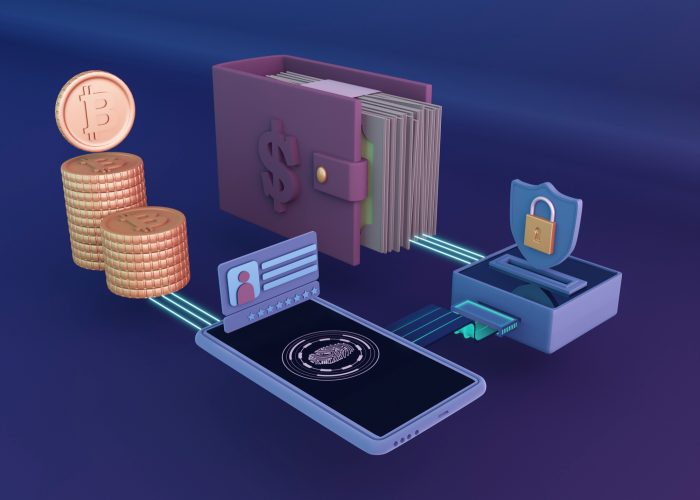
Last mile delivery is the final stage of the delivery process when a package is in transit to its final destination from the nearest transportation hub.
But last mile delivery can also exist in the digital world, such as when delivering crypto asset transfers through their final transfer stage.
Given the rise of cryptocurrency users, it’s important to ensure the security of people’s assets.
Are systems prepared to handle these transfers? Are providers safeguarding against risks like hacking or interception? Let’s explore how companies address these security concerns.
Security Challenges in Digital Last Mile Delivery
Just like route optimization for last mile delivery is essential when delivering packages in today’s world, digital last mile delivery of crypto assets needs to run smoothly.
The final stage of crypto asset transfers faces unique challenges. The digital last mile is often the point where vulnerabilities are most exposed, as assets leave secure storage environments like custodial wallets and head to their intended destinations.
Hackers know this too well, frequently targeting weak points during these critical moments.
Phishing scams, man-in-the-middle attacks, and malware injections are just a few tactics used to intercept or redirect transactions. Weak API security and poor encryption standards can exacerbate risks further.
What factors contribute to these security issues? They include:
- Inadequate authentication protocols for users and systems
- Poorly configured APIs exposing sensitive data
- Lack of real-time monitoring for suspicious activity
- Limited adoption of multi-signature wallet protections
Understanding these gaps is the first step toward building better defenses.
Technologies Securing Crypto Transfers in Their Final Stage
The last mile for crypto transfers demands robust security technologies.
Companies are implementing solutions that safeguard transactions from interception or manipulation during this critical phase. These tools work to eliminate weak points where hackers may exploit vulnerabilities.
Multi-signature wallets, advanced encryption protocols, and blockchain monitoring systems lead the charge in bolstering defenses.
Biometric verification is increasingly popular to confirm identities, while machine learning helps identify unusual patterns within transaction networks.
Other complementary measures include:
- Time-lock smart contracts ensure funds can only move after a set period
- Cold storage integration for temporarily halting suspicious transfers
- Hardware security modules (HSMs) protect private keys offline
- Secure API gateways, preventing unauthorized system access
By combining these technologies with proactive strategies, companies reinforce transaction safety effectively.
Role of Encryption and Blockchain in Safeguarding Assets
ShutterStock royalty-free image #1043755516, ‘Side view of businessman hands using tablet with creative blockchain hologram. Cryptography and technology concept. Double exposure ‘ uploaded by user #301518489, retrieved from ShutterStock on May 20th, 2025. License details available at https://www.shutterstock.com/license, image licensed under the ShutterStock Standard Image License
Encryption and blockchain technologies are at the core of securing crypto transactions. They work together to ensure data remains confidential, tamper-proof, and resistant to interception during last mile delivery.
Encryption protects transaction details by converting them into unreadable formats that only authorized parties can decode.
Blockchain’s decentralized nature adds another layer of protection. Each transaction is recorded in an immutable ledger, making it nearly impossible for attackers to alter or erase transfer histories without detection.
Specific roles these technologies play include:
- Encrypting private keys with AES-256 standards for maximum security.
- Using elliptic curve cryptography (ECC) for secure signing processes.
- Employing blockchain consensus mechanisms like proof-of-stake (PoS) to validate transfers securely.
- Maintaining audit trails through distributed ledger technology for transparency and fraud prevention.
Together, these tools create a robust shield against cyber threats targeting the asset transfers’ final stage.
Human Errors and Insider Risks During Final Transfers
While technology addresses many external threats, human errors and insider risks remain significant vulnerabilities in last mile crypto transfers.
Mistakes during manual operations, such as entering incorrect wallet addresses or failing to double-check authentication steps, can result in irreversible losses.
Insiders with malicious intent or negligent behavior pose additional dangers.
Even sophisticated systems can’t fully eliminate these risks without proper oversight and training.
Employees handling sensitive transactions must adhere to strict protocols to minimize exposure.
Key contributors to these risks include:
- Negligent handling of private keys or credentials by employees
- Lack of employee training on phishing recognition and secure practices
- Insufficient background checks for staff managing high-value transactions
- Poor internal monitoring allows unauthorized actions to go unnoticed
Addressing these issues requires a mix of rigorous policies, education, and automated safeguards against user error or misconduct.
Emerging Best Practices for Secure Asset Transfers
To ensure secure last mile delivery of crypto assets, organizations are adopting advanced best practices. These strategies go beyond just relying on technology, incorporating proactive planning and operational improvements to close security gaps.
Building resilience involves integrating automated safeguards with comprehensive human oversight. Combining multiple layers of protection ensures that if one defense fails, others remain active to mitigate risks.
Key emerging practices include:
- Implementing transaction velocity limits to flag unusually large or rapid transfers
- Using geofencing tools to restrict access based on location parameters
- Conducting regular penetration testing to identify and resolve vulnerabilities
- Establishing strict segregation of duties to prevent insider abuse or fraud
By staying ahead with these measures, companies reinforce trust in their ability to protect high-value crypto transactions at every step.
The Takeaway
Securing last mile delivery for crypto asset transfers demands advanced technologies, rigorous protocols, and proactive measures.
By addressing vulnerabilities and adopting emerging best practices, organizations can protect high-value transactions while building trust in an increasingly digital financial world.