
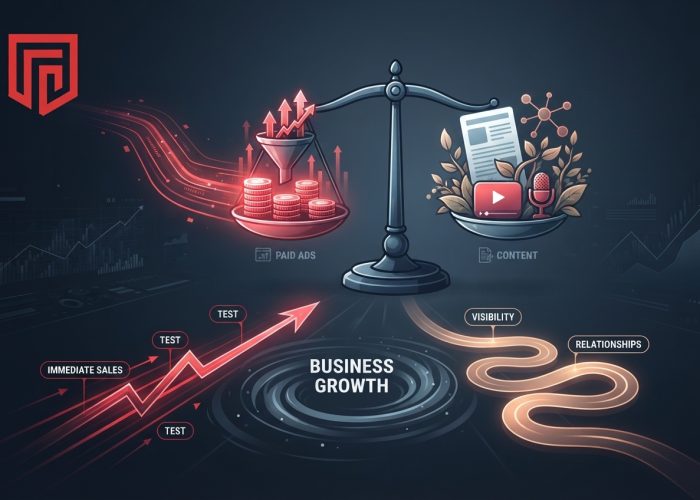
Growing an online business rarely depends on one marketing channel. Paid advertising can put an offer in front of people quickly, while useful content and industry relationships can build visibility over a longer period. The challenge is deciding how to combine these approaches without spending beyond the budget or producing content that reaches the wrong audience.
A practical plan starts with the business goal. A company seeking immediate sales may test search ads, while one building recognition in a specialist market may invest more in articles, partnerships, and organic search. In many cases, both are useful—but they should be measured differently and supported by a clear understanding of costs, audiences, and available resources.
Give Each Channel a Defined Job
Paid advertising is useful when a business wants to test a message, reach people searching for a specific solution, or promote a time-sensitive offer. Campaigns can be adjusted as performance data comes in, but impressions and clicks are not the same as profitable results. The business needs to know what action it wants a visitor to take and how much it can reasonably spend to earn that action.
Content outreach works on a different timetable. Publishing a well-targeted article on an industry website may introduce a business to readers who already care about its subject. The placement can also support credibility and bring referral visits over time. However, publication is not automatically valuable just because a site has a large audience or a high authority score. The topic, readership, editorial quality, and fit with the business all matter.
Before choosing a channel, write down its intended role. For example, an ad campaign might test whether small businesses respond to a new service, while a contributed article explains a practical problem the service solves. The two efforts can reinforce each other, but they should not be expected to produce identical outcomes.
Estimate Advertising Costs Before Launch
Advertising costs depend on factors such as the platform, audience, location, competition, campaign objective, and quality of the landing page. A click may be affordable in one market and expensive in another. The campaign budget should also account for the work required to create ads, configure tracking, maintain the account, and improve performance—not only the amount paid to the platform.
For businesses planning search campaigns, Osdire’s Google Ads cost 2026 guide outlines considerations such as cost per click, monthly spend, setup, and management pricing. It can help frame the questions to ask before setting a budget. Treat any general figures as planning context rather than a promise of what a particular campaign will cost: actual results vary with the account and market.
Start with a defined test budget and a specific measurement period. Track qualified inquiries, purchases, or another meaningful action alongside clicks. If the campaign attracts traffic but few relevant conversions, review the search terms, ad promise, and landing page before increasing spend. Scaling a weak campaign can make the problem more expensive without solving it.
Choose Outreach Opportunities for Relevance
When considering external publishing, assess the site as a publisher rather than treating it as a route to a link. Read recent articles and look for clear editorial standards, a consistent subject focus, and an audience that plausibly overlaps with the business’s customers. Check whether the proposed contribution can answer a real question or provide expertise the publication’s readers would value.
Directories can help with initial discovery. A collection such as this guest posting site list may offer places to investigate, but inclusion should not replace individual review. Metrics and labels do not tell you whether a site is actively read, whether it accepts relevant material, or whether its standards align with your brand.
Prepare a distinct pitch for each suitable publisher. Explain the intended reader, the topic, and what the article will contribute. Avoid sending identical drafts across multiple websites. A piece about reducing checkout friction, for example, could examine the issue from a technology perspective on one publication and a customer experience perspective on another. The underlying expertise may be related, but the finished work should be original and tailored.
Plan the People and Production Costs
Campaigns and content both require execution. A small team may need help with keyword research, writing, graphic design, analytics, or campaign management. Define the deliverables before hiring: specify the audience, scope, deadline, format, revision expectations, and how success will be reviewed. Clear instructions make it easier to compare proposals and reduce avoidable back-and-forth.
Osdire is a freelance marketplace where businesses can hire across areas such as writing, marketing, design, and technology. When comparing freelance support, consider the full scope of the work rather than choosing on price alone. Ask what is included, how communication will work, and who is responsible for checking facts, tracking setup, or final approvals. Set expectations for payment and acceptance before an order begins.
External expertise is most useful when it fills a defined gap. A freelancer can help produce an article, but the business still needs to provide accurate product information and review claims. An advertising specialist can manage campaign settings, but the company should agree on goals, access, reporting, and budget limits.
Review Results and Adjust the Mix
Set a small number of measures for each activity. Ads might be judged by qualified leads or cost per acquisition; outreach might be assessed through relevant referral traffic, inquiries, or useful audience engagement. Page views alone rarely show whether a channel is contributing to the business.
Review performance at intervals that suit the channel. A paid test may provide early signals, though it still needs enough data to be meaningful. An article may take longer to attract readers and should not be dismissed after a few days. Use findings to refine the next step: adjust a campaign, improve a landing page, pitch a better-matched publisher, or choose a more focused topic.
Build a Sustainable Growth Plan
Effective digital growth is not a choice between advertising and content. It is a coordinated plan in which each activity has a purpose, a realistic budget, and a way to judge its contribution. Use paid campaigns when speed and testing matter, and pursue publishing opportunities when relevant expertise can serve an existing audience. Review costs and results honestly, then direct resources toward the channels that produce meaningful progress.