
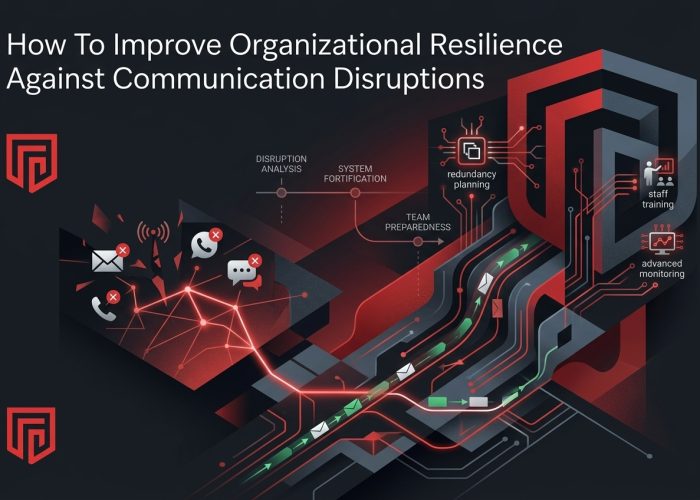
Organizations today rely on constant talking and writing to manage teams, help customers and keep things running smoothly. People usually think that email, chat apps plus mobile networks will always work. Problems happen because of hackers, software bugs, power outages or damage to large infrastructure. When these tools stop working, even for a short time, it can cause many other problems, like slow decisions and people not knowing what is happening. Making these systems stronger requires careful choices about technology, good planning and making sure the staff is ready.
Risks In Modern Communication Systems
Current tools are all linked together – This makes work fast but it also means many things can break at the same time. If one login system or cloud service has a problem, it might stop many different tools from working. Hackers might also use software that locks files to target the platforms, which stops teams from talking during an emergency. Since many people work from home or different offices, they depend on the internet even more – this makes it harder to fix problems quickly.
These risks do more than just cause annoyance – When individuals cannot talk, they make decisions slowly, struggle to coordinate during emergencies but also lose the trust of their customers. In digital security, slow talking can let a virus spread further. For people working outside of an office, they might lose contact with their managers, which makes things less safe and less efficient – these issues show why being able to communicate during a crisis is a main part of managing a business, not just an extra thought.
Building Redundancy In Communication Channels
A good way to stay connected is to have more than one way to talk. You can avoid relying on just one app – having multiple separate ways to send messages, call or send alerts – this could be a mix of cloud apps, secure chat tools and standard phones. The goal is to make sure at least one way to talk still works if others fail.
Having extra options also applies to the hardware as well as services you use. Relying on just one internet company or one data center makes you more likely to have a total blackout. By using different companies or setups, you are less likely to lose all ways to talk. For teams operating in remote or high risk environments, tools such as a satellite messenger can provide an additional layer of connectivity when terrestrial networks are unavailable, ensuring that essential status updates and emergency coordination remain possible even under extreme conditions.
Strengthening Field And Remote Connectivity
Working from home or in the field is hard because the internet signal changes a lot. People in quiet areas or those who travel may not always be able to reach company files. Making communication stronger in these cases means planning for the internet to go in or out rather than assuming it is always there. Using apps that work offline or use very little data helps people keep working until the signal returns.
Management should also make sure mobile tools are safe – Private talk should stay hidden even when using backup tools, which means using apps that scramble messages so others cannot read them and having clear rules on what info can be shared on backup systems. If staff know how and when to switch to a backup, the business stays safe next to keeps running during a breakdown.
Planning For Incident Response Communication
Handling a crisis well depends on having clear ways to talk – When things break, having a set list of who to call and backup steps helps teams move fast without getting confused – this involves picking main and backup ways to coordinate plus setting rules for talking to the public, customers and partners.
Plans should also cover the worst situations where the main systems are totally gone. In those cases, you might need to talk in person or use systems that are not connected to the main network. Checking these plans often ensures they still work as the company grows. Without this work, even small tech problems can turn into big disasters because individuals are unsure what to do.
Testing And Continuous Improvement
Planning is not enough – you also have to practice but also get better. Companies are encouraged to pretend their systems are broken to see how well the team handles it – these tests help find weak spots and show hidden problems that no one noticed when things were working fine.
Getting better also means looking at real mistakes and changing rules based on what happened. As technology changes, new things can break – it is important to check your setup often. By treating this as a regular task, companies stay ready for both small glitches as well as big emergencies.
Making a company stronger against communication gaps involves using backups, planning well and testing often. As systems get more connected, staying in touch during a hack or an outage is very important for staying stable. By having backup ways to talk, helping remote workers and checking plans, you can lower lost time or keep people working together during tough times – this readiness ensures that important choices are still made even when the main phones or computers are down.