Payroll fraud is a cause of financial and operational difficulties for businesses – this activity includes payments that lack authorization, the creation of false employee records, the modification of work hours and the changing of bank details. Such actions are harmful to company funds plus the level of trust between staff members. Many organizations are now users of digital systems for payroll management but technology is not a complete solution for risk. It is necessary for businesses to establish secure workflows that decrease fraud opportunities and increase the accountability of all departments.
Modern HR platforms are sources of tools that improve payroll security through automation, access limits and audit logs. Reliability in the payroll environment is higher when organizations use these features alongside internal procedures. Secure workflows are also helpful for human resources but also finance teams as they work together – these processes are effective at reducing manual mistakes that are often linked to fraudulent behavior.
Access Control Procedures
Limiting system access according to employee duties is an effective method to prevent payroll fraud. Permissions to edit payroll records, change salary amounts or approve payments are not appropriate for every staff member. Secure HRIS workflows are useful because they allow businesses to set specific roles so that employees only see the data they need for their work – this practice is helpful for identifying suspicious activity and makes unauthorized changes less likely.
Multi-factor authentication is another tool that makes payroll protection stronger – asking for extra verification. Fraud is more difficult when these steps are present, even if login details are lost or stolen. Organizations are more secure when they review user permissions often and remove access for employees who leave or change roles – this habit is a way to close security gaps.
Employee Record Verification
Accurate data is a requirement for payroll security – Fraudulent payments are possible when false accounts are in the system or when old records are not deleted. It is important for businesses to review employee files regularly to confirm that every person receiving pay is a current as well as legitimate worker. Automated alerts in the HRIS are helpful for finding duplicate records, strange payment changes or files that are missing information.
Companies are able to improve accuracy – linking employee records to systems for attendance, scheduling and benefits. Human resource management systems are useful because they lower the need to move data manually, which is a process where errors or manipulations can occur. Consistent verification is a way for organizations to keep records clean and maintain transparency.
Approval Workflow Standards
Secure payroll workflows are more effective when they include multiple approval stages. Risks are lower when responsibilities are split among different employees so that one person is not in charge of the whole process. As an example, it is possible for one employee to prepare the data while a manager is responsible for the final review – this structure is a source of accountability or makes unusual transactions visible before the release of funds.
Automated workflows are also a way to ensure that every change follows the same review process. Authorizations in writing are necessary for salary increases, overtime changes and bank account updates. Digital records are useful for creating an audit trail for managers to check if suspicious activity happens. Standardized procedures are helpful for reducing both intentional fraud and accidental errors.
Audit Tracking Systems
Audit logs are tools for the identification of irregularities next to the monitoring of user actions. A secure HRIS platform is a record of who opened files, what data they changed and the time of the actions – these logs are helpful for investigations and are sources of evidence if fraud occurs. Regular reviews of the reports are a way to find patterns that are otherwise hard to see.
Internal audits are also necessary to check if payroll is accurate plus follows rules. Monthly reviews are a way for businesses to find inconsistencies before they become large financial problems. Oversight from finance or compliance teams is an additional layer of safety. Transparent systems are a reason for employees to follow the correct procedures.
Payroll Data Protection
Protection of payroll data is important because these systems hold private information like salaries and bank details. Businesses are more secure when they use encrypted systems to protect data during storage and when it moves between systems. Encryption is a way to stop unauthorized users from reading stolen information. Secure cloud platforms are also helpful because they provide updates but also monitoring.
Training for employees is another part of protecting systems – Staff members are more effective when they know how to identify phishing, suspicious emails and social engineering. Many incidents are the result of stolen login details rather than software flaws. Regular training is a way for employees to help maintain security.
Reporting & Response Planning
Organizations are more successful when they have clear ways for employees to report suspicious activity. Staff members are more likely to share concerns when the process is clear and professional. Anonymous channels are helpful because employees can speak without fear. Early reports are a way to stop small issues from becoming large losses.
A response plan is also necessary for a quick reaction to fraud. Businesses are more prepared when they know who will lead the investigation as well as talk to the affected staff. Quick actions are a way to limit financial loss. Companies with these strategies are better at recovering from incidents and keeping the confidence of their workers.
Conclusion
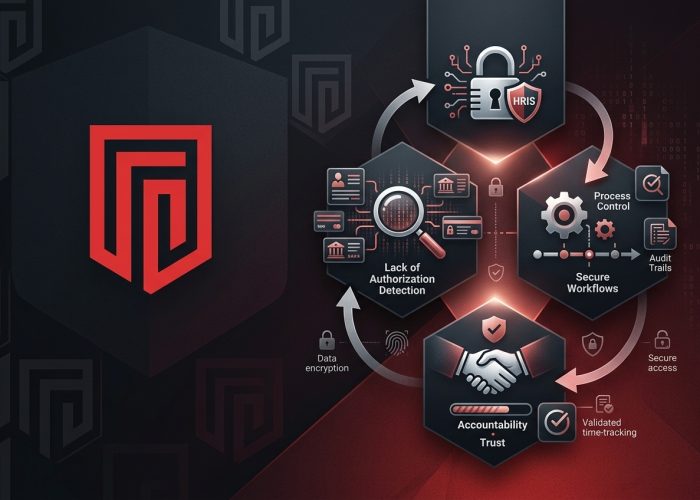
Payroll software is only one part of preventing fraud – It is necessary for businesses to create secure HRIS workflows that include access limits, verification, approval steps, audit logs and data protection – these processes are effective when they work together to lower weaknesses or improve accuracy.
Consistent oversight and staff awareness are also important for management. Regular audits, training and reporting systems are ways to find risks early. Businesses are able to protect their finances next to build trust when they use strong workflows and keep everyone accountable.