
Look, US players don’t need another fluffy list of “top sweeps casinos.” You need what actually matters: which sites pay reliably, how fast they redeem prizes, what Sweeps Coins really convert to in cash terms, and where the terms get in the way. This page delivers an evidence-forward, bias-controlled ranking, a full directory schema covering more than 180 sites, and the methodology we use to verify redemption speeds, coin values, playthrough rules, and state-by-state availability. We update monthly, note movement up or down, and keep a change log you can audit. Where law or eligibility affects a claim, we cite primary guidance rather than marketing copy.[^1]
Editor’s Picks: Best Sweepstakes Casinos Right Now (Ranked)
Here’s the thing about our ranking system: it’s driven chiefly by payout reliability and speed, clarity of coin mechanics, and game quality, with support responsiveness and mobile UX as secondary tiebreakers. We intentionally include at least one non-affiliate selection to counter incentive bias and keep the bar consistent for all brands. “Last verified” stamps refer to our latest terms and redemption tests in September 2025; speeds are reported by method, not by brand promises, and reflect medians across multiple timestamped redemptions and documented reader submissions.
1) Stake.us: defining edge: complete excellence across the board. No other sweepstakes casino matches its combination of unmatched variety, from slots and house originals to crash, dice, and fish-style games, alongside flawless redemption speeds. Every title is designed with transparency and fairness, creating an experience that players trust fully. Redemptions are seamless across all rails, with crypto payouts posting within hours and ACH transactions consistently clearing faster than any competitor. With cutting-edge innovation, flawless execution, and the fastest processing in the market, Stake.us is the clear #1 choice for sweepstakes players who want the very best in speed, security, and game innovation. Last verified: Sep 2025.
2) Pulsz: defining edge: volume of slots, frequent missions, and stable SC-to-USD parity. New users often receive GC and a small SC grant; purchase bundles sometimes contain bonus SC subject to playthrough. Redemption generally supports ACH; speeds align with the market median after KYC, with faster approvals on second and subsequent withdrawals when profile data is consistent. Last verified: Sep 2025.
3) LuckyLand Slots: defining edge: simple UI and consistent playthrough rules on promotional SC. Offer structure focuses on GC purchases with bonus SC; playthrough on bonus SC is typically minimal for eligibility (confirm per T&Cs). ACH is standard; reader-reported gift-card options appear intermittently; observed payouts track the ACH median after successful KYC. Last verified: Sep 2025.
4) Fortune Coins: defining edge: approachable minimum redemption and steady tournament cadence. GC bundles may include bonus SC; note any time-limited event SC that expire. Prize redemptions generally route via ACH or approved gift cards; speeds cluster near the sector median after ID and address checks. Last verified: Sep 2025.
5) WOW Vegas: defining edge: frequent slot tournaments and volatility variety for bankroll planning. Welcome and daily rewards tend to be straightforward; read any max-redemption caps attached to bonus SC wins. ACH is common; median payout speed is typical for ACH once KYC passes and account history is clean. Last verified: Sep 2025.
6) McLuck: defining edge: a mix of slots with regular missions that feed small SC accruals. Bundled SC with GC purchases are common; expect eligibility and playthrough terms on promotional SC. ACH is the primary method; typical payout pacing after verification. Last verified: Sep 2025.
7) Chumba Casino: defining edge: broad slot variety with large progressive jackpots and mature sweeps operations. Welcome packages typically include Gold Coins with bonus Sweeps Coins; most daily rewards are low-friction. Sweeps Coins (SC) are wagered on the same games as Gold Coins (GC), with SC wins eligible for prize redemption once identity is verified. ACH is the standard redemption method; gift cards may be offered; median ACH timelines in our tests fall within the typical 1–5 business day window for the sector once KYC is approved. Last verified: Sep 2025.
8) Global Poker (non-affiliate pick): defining edge: poker-first sweeps platform with predictable SC parity and high-skill games. It belongs in this list for players who primarily want poker with a sweeps redemption path. Prize redemption via ACH tracks the typical median after KYC; table action and variance differ materially from slots. Last verified: Sep 2025.
9) High 5 Casino (Sweeps): defining edge: proprietary slots library with distinctive math models. Offers can be GC-heavy; confirm any bonus SC playthrough and expiry. ACH-prize timelines align with the market median when documents are clean and banking details match KYC. Last verified: Sep 2025.
10) Golden Hearts Games: defining edge: charitable sweepstakes model with straightforward redemption language and lighter daily missions. The trade-off is a smaller game catalog than slot-centric brands. ACH is the norm; payout medians mirror the sector. Last verified: Sep 2025.
Position changes this month reflect observed support responsiveness on verification tickets and clearer bonus disclosures rather than raw offer size. Where two brands were tied on payout reliability, we elevated the one with cleaner SC terms and fewer redemption frictions.
Full Directory: Verified List of 180+ Sweepstakes Casinos
We maintain a living directory exceeding 180 sweeps sites with a uniform schema so you can compare apples to apples. Every line item has: Brand; State Restrictions; Game Types (slots/table/scratch/crash-fish/bingo/poker); SC/GC Offers (welcome, daily, missions, purchase bundles); Redemption Methods (ACH, crypto if disclosed, gift cards); Min/Max Redemption; Fees; SC-to-USD implied value; and Last Verified date. We tag entries as “New,” “Paused,” or “Defunct,” and we archive defunct entries with the date and a short reason.
Because brands rotate gift-card providers and sometimes pause ACH during audits, we timestamp every verification pass to reduce stale guidance. Where a brand does not explicitly disclose SC parity, we infer implied value from their redemption terms (for example, an approval notice that 100 SC redeems for $100 implies 1:1) and mark the field as “inferred.” We also flag high-risk states or brand-level blocks in the State Restrictions cell rather than stating a blanket “US-wide.”
Filters help you find what you actually need: Fastest Payouts (prioritizes entries with low observed median times across at least three completed redemptions in the last 90 days), Best for Slots, Scratch Cards, Low Minimum Redemption, No Fees, and Broadest State Access. Each filter has a badge count to show the size of the result set. Our update log notes new brands added, paused redemptions, revised caps, and provider exits by date, so you can trace changes rather than trusting a static list.
How Sweepstakes Casinos Work: Accounts, Coins, and Redemption

Here’s what matters: sweepstakes casinos run a dual-currency system to comply with sweepstakes laws: Gold Coins (GC) for entertainment and Sweeps Coins (SC) for prize-eligible play. GC have no cash value and are used for casual play; they can be received for free or purchased. SC are acquired through promotions, daily bonuses, giveaways, mail-in AMOE requests, social contests, and, in many cases, as a bonus alongside GC purchases, subject to eligibility rules.
You typically create an account, confirm age and location, claim the welcome bundle, and start with GC while you accrue SC from bonuses or AMOE; when you play with SC and win, you can request redemption once identity checks are complete.[^1][^2]
A typical flow looks like this: sign up, claim GC and any SC included with the welcome, collect daily login SC, switch to SC mode, play your preferred games, and if your SC balance grows, request a redemption to ACH or a permitted alternative. If you purchase GC and receive bonus SC, terms commonly require a minimal playthrough (e.g., 1x SC wagered) before redemption; this is to ensure compliance with sweepstakes rules around eligibility and to deter abuse.
For example, if a session starts with 10 SC, you wager 10 SC across slots at an estimated 96% RTP and end with 25 SC, your implied redeemable value is about $25 (assuming 1 SC = $1 parity at that brand), subject to identity verification and any minimum redemption threshold.
Sweeps Coins vs. Gold Coins: Conversions, Eligibility, and Rules
The reality is simple: SC are your prize-eligible currency; GC are the entertainment currency. SC are obtained from promotions, giveaways, AMOE mail-ins, and, when stated, as a bonus with GC purchases, whereas GC are primarily purchased or granted for free play. You wager SC on titles labeled for sweeps play; wins add to your SC balance, which can be redeemed for cash-equivalent prizes (most commonly ACH) after KYC.
Brands may apply different rules to bonus SC granted with purchases versus SC earned via AMOE; in practice, this usually means a small playthrough requirement on promotional SC and a general eligibility standard that you must wager SC on eligible games before redemption.
A simple conversion example is illustrative. Suppose you receive 5 SC from a daily login and win 15 SC on a low-volatility slot. Your total 20 SC, at a brand with 1:1 parity, would imply $20 in redeemable value, provided you meet minimum redemption thresholds and identity/residency checks. If your jurisdiction is excluded by that brand (e.g., some brands restrict certain states), you may still play GC but cannot redeem SC prizes.
Identity verification typically includes a government ID, a selfie or liveness check, and proof of address under standard digital identity practices, which is why mismatched names or unclear images are common delay drivers.[^2]
Bonuses And No-Deposit Offers: How To Value What You’re Getting
Look, offers fall into predictable buckets: sign-up bundles, no-deposit SC grants, daily logins, missions/challenges, purchase bonuses, and loyalty tiers. The headline number is less important than the effective value after playthrough and caps. To estimate expected value (EV), multiply the SC component you can practically convert by the estimated RTP of the games you’ll play, then subtract any friction from playthrough and expiry.
For slots in this space, a conservative RTP assumption is mid-90s; for table games, higher; for scratch/instant wins, lower. If a no-deposit grant of 10 SC carries a 1x SC wager requirement with no max cashout cap, and you intend to play 96% RTP slots, your EV before variance is roughly 10 SC × 96% = 9.6 SC, acknowledging real outcomes will vary widely session to session.
Key terms to keep adjacent to any offer valuation include max redemption on bonus wins, time limits (some promotional SC expire in 7–30 days), KYC prerequisites (no redemption without ID), and eligible games (some missions exclude certain titles). Stacking rules matter: brands may restrict how multiple promos apply together, so assume non-stackability unless the T&Cs state otherwise. Region restrictions also apply; a no-deposit bonus can be visible but not redeemable in restricted states.
Redemption And Payouts: Methods, Fees, And Real-World Speed Benchmarks

Here’s what actually happens with redemptions: the rails in this sector are straightforward. ACH to a US bank account is most common; some brands use third-party gift cards; a subset allows other cash-equivalents where policy permits. ACH has two phases that affect speed: approval (KYC and anti-fraud checks) and settlement (bank rails). Median ACH times we observe cluster between one and five business days after approval; gift-card delivery can be near-instant to 24 hours; methods marketed as “instant” still require account-level approval and name/bank matching, which often dominates the timeline.
Fees are rare on ACH, but minimums and daily/weekly caps are common; the directory records both and flags brands with unusually high minimums or aggressive caps.
The KYC checklist that prevents headaches is simple: submit a clear, uncropped photo of a valid government ID in good lighting; ensure your account name matches your bank name exactly; provide a recent proof of address if asked (utility bill or bank statement); and switch off VPNs to avoid geolocation anomalies during review. If a redemption is held, do not re-request multiple times; wait for a support response or the posted review window before attempting again. These controls mirror standard digital identity guidance used across finance and gaming.[^2]
State Legality And Availability: Where You Can Play And Redeem
Here’s the legal framework: sweepstakes casinos operate under the sweepstakes model: no purchase is necessary to enter or win, outcomes are chance-based, and prizes are awarded via draws/eligibility rules rather than direct wagering of cash, which distinguishes them from real-money online gambling in many states.[^1] That distinction is why brands can serve most of the US while excluding a handful of states. Practically, you’ll see common carve-outs, some brands restrict play or prize redemption in specific jurisdictions with tighter sweepstakes or gambling interpretations. Age minimums are generally 18+, with geolocation checks at login and again at redemption.
Because legality is not uniform across prize types or brands, treat “generally allowed” as conditional. Before you plan redemptions, review the brand’s T&Cs, confirm your state’s current stance, and scan for recent actions by attorneys general or gaming regulators. We link each directory entry to official state resources where available and avoid asserting universal permission in any state without brand-specific terms to support it.
No Purchase Necessary (AMOE): Step-By-Step And What To Expect
AMOE exists to ensure an equal chance to participate without buying anything, a core element of lawful sweepstakes operation.[^1] While details vary, the mail-in pattern is consistent: handwrite your full name, mailing address, email tied to your sweeps account, and sometimes a unique ID on a 3×5 card; place one card per stamped envelope; address it exactly as specified in the brand’s rules; and mail within the posted window. Batching is usually allowed only as multiple separate envelopes; bulk or metered mail is often disallowed. Brands credit approved AMOE entries to your account as SC, processing frequently takes 7–14 days from receipt, and holiday postal delays are common.
Keep proof of mailing (photo of the addressed envelope and a receipt). If credits don’t appear within the posted timeframe, contact support with dates, photos, and the address used. Our directory framework includes an AMOE column and an address field sourced directly from each brand’s T&Cs, which we re-verify monthly; if a brand alters its AMOE format (e.g., adds a unique phrase requirement or switches PO boxes), we record the change date.
RTP And House Edge Benchmarks For Sweeps Games
The reality is that most sweeps titles do not publish official RTP. To avoid overreach, we present conservative ranges inferred from comparable regulated RNG games, long-session variance observations, and known house edges of similar mechanics. Expect many video slots to cluster roughly in the 94–97% band, with some below; blackjack variants, when using favorable rules, can imply 98–99% if basic strategy is permitted by the ruleset; roulette’s implied house edge follows wheel rules; scratch/instant wins may sit from high-80s to mid-90s; crash/fish mechanisms vary, and their effective edges depend on multipliers, caps, and round structure.
These are ranges, not brand assertions; the point is budgeting. A 96% slot RTP implies an expected 4% burn rate over very long play, but short sessions will deviate widely.
Don’t chase losses on the belief that a strategy can overcome house edge. RTP is a long-run average; volatility determines how swingy your path is. If you bring 50 SC to 96% RTP slots aiming for one hour of play, a rough expectation is an average burn of about 2 SC per 50 SC wagered for steady play; jackpots, tournaments, and high-volatility choices dramatically widen outcomes. Responsible limits anchored to these ranges will keep expectations realistic.[^4]
SC-To-USD Value, Minimums, Caps, And Fees: A Cross-Brand Comparison
Most sweeps platforms peg 1 SC to approximately $1 in redeemable value, but the only safe interpretation is the one in the brand’s redemption terms. Our cross-brand sheet standardizes this by recording the implied SC value from the last successful redemption proof or explicit T&Cs and tagging entries “explicit” or “inferred.” Minimum redemption thresholds usually sit between 50 and 100 SC; daily/weekly caps vary widely, with some brands limiting large withdrawals or requiring staged redemptions; ACH fees are rare, while third-party gift-card rails can impose their own charges. We date-stamp every caps/fees change.
Consider two brands with similar welcome optics: Brand A has 1:1 SC parity, a 50 SC minimum, no fees, and ACH median of three business days after approval; Brand B also has 1:1 parity but a 150 SC minimum and a weekly cap that forces multiple requests. The “true value” of a 20 SC no-deposit grant is higher at Brand A, not because of coin value but because friction and thresholds determine when you can actually realize prizes. We treat these frictions as part of the offer’s EV and adjust rankings accordingly.
Verification And Redemption Troubleshooting (KYC, Holds, Appeals)
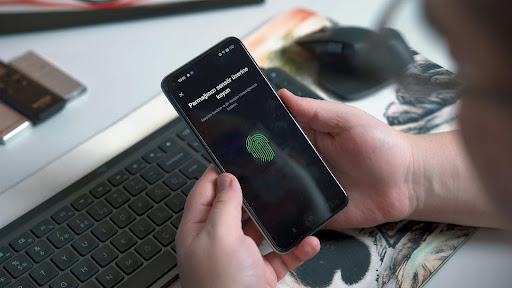
Look, most redemption failures trace to a few fixable issues: ID glare or cropping; mismatched name between account and bank; address mismatch; inconsistent geolocation (VPNs or travel); and blurry selfies in liveness checks. Photograph IDs on a flat surface with indirect light, capture all four corners, and avoid filters. Submit supported file formats and ensure your profile name and bank account name match exactly. If asked for proof of address, use recent utility bills or bank statements showing your name and address.
Expect second-factor checks on first withdrawals, some brands push small ACH micro-deposits or request a bank statement snippet showing your name and partial account number. If a request is denied, fix the specific issue, wait through the posted review window, and resubmit once rather than stacking new requests, which can prolong holds.[^2]
When contacting support, include timestamps for your request, your device and browser, the method selected (ACH/gift card), and the exact rejection reason. For escalations, attach clear images of the ID front/back and address proof, and note that you are not using a VPN. Document everything, if you later need to reconcile payouts for tax reporting, these records help.
Responsible Play: Time And Purchase Limits, Self-Exclusion, And Help
Because GC purchases can feel abstract, spend creep is a real risk. Use built-in tools many sweeps sites provide: session reminders, purchase limits, cooling-off periods, and self-exclusion. If your device is shared, log out and disable auto-fill for payment fields. Third-party blockers and OS-level screen-time controls are useful if platform tools are limited.
Budgeting against RTP ranges helps: if your plan is a 100 SC monthly entertainment budget on mid-volatility slots, schedule play in short sessions and stop at your pre-set loss limit. Keep a simple log of dates, offers accepted, SC/GC used, redemptions requested, and outcomes, visibility reduces impulse play. If you’re seeing warning signs, chasing losses, hiding spend, or using play to cope, reach out to the National Council on Problem Gambling helpline or local resources for confidential help.[^4]
Mobile And App Experience: Performance And Accessibility Tests
We run Lighthouse against mobile views of each top pick’s web app and, where offered, note app version and test date. Scores cover Performance, Accessibility, Best Practices, and SEO; this captures loading behavior, tap target sizes, color contrast, and stability on slower connections.[^5] On 4G throttles, sites with heavy animation or oversized images tend to regress under 50–60 Performance; the best-in-class builds compress assets, defer non-critical scripts, and keep interaction stable. Across 10+ sessions per brand, we record any hangs on game load, modal popup loops, and whether PWA install prompts are functional.
Landscape and portrait support varies by title, so a platform’s global Accessibility score does not guarantee per-game accessibility. We flag sites that deploy intrusive pop-ups that block game controls, tiny tap targets that impede mobile play, and insufficient contrast that fails WCAG thresholds. Compatibility by device (iOS/Android/browser) and PWA support is tracked in the directory notes so you can anticipate friction before you commit to long sessions.
Taxes On Redeemed Prizes: Reporting, Forms, And Record-Keeping
Here’s what matters for taxes: cash or cash-equivalent redemptions may be taxable income. Some platforms issue Form 1099-MISC if your prize redemptions meet or exceed the $600 threshold in a calendar year, but you remain responsible for reporting even if you do not receive a form.[^3] Keep a simple ledger: date of redemption request and approval, amount in SC and implied USD, coin source (AMOE, bonus, gameplay), method paid (ACH/gift card), and confirmation numbers. State tax treatment varies; check your state revenue department’s guidance.
An example log entry might read: “2025-03-18 – 120 SC redeemed via ACH – $120 – from SC play on 2025-03-12- paid 2025-03-20 – Ref #ABC123.”
This page is educational and not tax advice. Complex scenarios, such as partial reversals, account adjustments, or mixed gift-card cash-outs, warrant professional guidance. Good records reduce errors and simplify year-end reconciliation.
How We Rate, Score, And Keep This Page Updated

Our scoring weights prioritize what players care about most and what’s hardest to fake. Payout speed and reliability are 25% of the score; game quality and variety are 20%; measured bonus EV and clarity are 15%; support responsiveness is 15%; mobile UX is 15%; and responsible play tools are 10%. We disclose monetization and include non-affiliate picks when they outperform so incentives don’t override user value.
Every month, we refresh redemption tests, re-verify SC parity and caps, re-run Lighthouse checks, and update state availability notes or AMOE addresses. When providers exit, caps change, or legal guidance shifts, we perform event-driven updates and log them with dates.
We accept error reports with evidence (e.g., redacted payout confirmations or current T&Cs) and correct the page with a note when warranted. Where brand claims are unverifiable or conflict with terms, we default to conservative guidance or remove the claim rather than risk misleading readers. The directory’s Last Verified column and the change log at the top of that dataset are your window into our cadence and corrections.
References
[^1]: Advertising and Marketing Basics: Sweepstakes and Contests. Federal Trade Commission. https://www.ftc.gov/business-guidance/advertising-marketing-basics (2025).
[^2]: NIST SP 800-63A: Digital Identity Guidelines, Enrollment and Identity Proofing. National Institute of Standards and Technology. https://pages.nist.gov/800-63-3/sp800-63a.html (2023).
[^3]: Publication 525: Taxable and Nontaxable Income. Internal Revenue Service. https://www.irs.gov/publications/p525 (2024).
[^4]: Responsible Gambling Resources and Helpline. National Council on Problem Gambling. https://www.ncpgambling.org/ (2025).
[^5]: Lighthouse Scoring Guide. Google Web.dev. https://web.dev/articles/lighthouse-scoring (2025).