
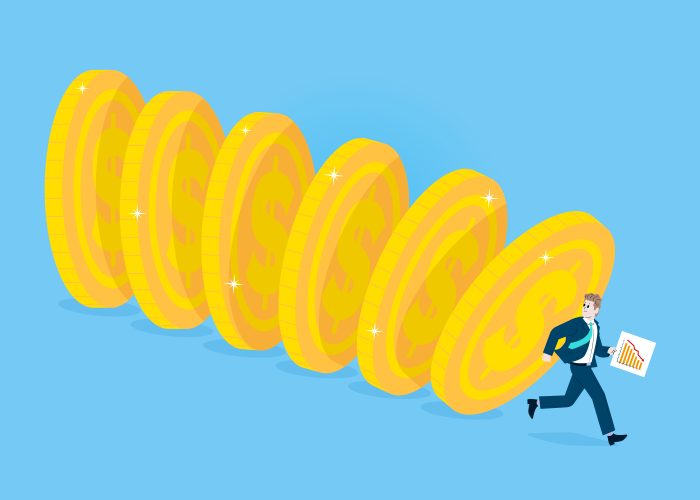
We don’t talk enough about how money messes with our heads. How a single unexpected bill can shake your confidence. How checking your bank account can feel like exposure therapy. How the smallest financial decision—buying a weighted blanket, booking a therapy session, replacing a worn-out mattress—can spiral into a shame loop.
If you’ve ever felt mentally exhausted by money, you’re not alone. The real weight isn’t always the debt. It’s the uncertainty. The mental math. The constant decision fatigue.
Financial Anxiety Isn’t Just “In Your Head”
It lives in your stomach, your sleep, your scrolling habits. And if it sticks around long enough, it can become something more serious, like the kind of ongoing worry explained in this NIMH resource on anxiety disorders. It tells you not to ask questions because you “should already know this.” It tells you you’re behind, even when you’re doing your best. And when that anxiety becomes chronic, it starts bleeding into other parts of your life—your relationships, your health, your sense of self-worth.
It’s not about budgeting better. It’s about finding options that don’t make your body tense up when you think about them.
Some People Use Credit to Cope. That Doesn’t Make You Bad.
You’re not reckless. You’re resourceful. There’s a difference.
If you’ve ever opened a line of credit just to breathe easier, you’re not a failure—you’re a person trying to get through. But that doesn’t mean every option is right for you. Before you say yes to anything, take time to understand the potential benefits for you and the potential downsides too.
You don’t need to get it perfect. You just need to get informed.
Let’s Be Honest About What Support Really Looks Like
Sometimes support is therapy. Sometimes it’s boundaries. And sometimes it’s money—real, accessible, structured support that keeps you from spiraling when life hits hard.
You’re allowed to need that. You’re allowed to research options that give you flexibility. You’re allowed to say, “I can’t handle one more financial surprise right now.”
That’s not weakness. That’s awareness.
You’re Not Bad with Money. You’re Just Doing This Alone.
Financial systems aren’t built for emotional safety. They’re built for risk, reward, and often, confusion. But you’re not doing this wrong. You just haven’t had a guide that speaks your language.
Clarity isn’t a luxury. It’s your right. And it starts with giving yourself permission to learn, not panic.
The Cost of Clarity Is Less Than the Cost of Avoidance
You know that low-grade hum in the back of your mind? The one that gets louder when bills are due or your card gets declined for the second time this month? That’s the mental tax of avoidance. And it’s expensive.
Avoiding money stuff doesn’t make it go away. It just makes it heavier when it finally lands. Looking at your finances—really looking—can be uncomfortable, but this government guide to coping with financial stress shows that taking action, even in small ways, can make a big mental difference.
You don’t need to overhaul your entire financial life in one day. You just need to open the door.
Survival Mode Isn’t a Long-Term Strategy
Sometimes you do what you have to do. You pick up the shifts. You ignore the overdraft. You juggle the bills like a part-time magician. And for a while, it works. You survive.
But eventually, survival mode becomes unsustainable. The emotional wear-and-tear starts to show up in your body, your energy, your relationships. That’s when it’s time to shift—not to perfection, but to support.
That support might look like a community. A therapist. A tool that helps you plan instead of panic. Or it might look like understanding the potential benefits for you in advance, so you’re not deciding under pressure.
You’re not weak for wanting to feel steady. You’re wise for recognizing when it’s time to stop just getting by.
Final Word: Your Mental Health Deserves a Financial Plan
This isn’t about becoming a spreadsheet wizard overnight. It’s about creating a system that lets you exhale. Whether that’s saying no to another “Buy Now, Pay Later,” or learning what a line of credit really means for your peace of mind, you’re allowed to take small steps.
Steps toward clarity. Toward control. Toward feeling safe in your own life again.