Math education often struggles to address individual learning differences. Students become frustrated when lessons move too fast or repeat content they’ve mastered. Artificial Intelligence (AI) steps in as a dynamic partner for educators. It analyzes how students engage with problems and uncover hidden challenges. AI transforms a rigid curriculum into flexible pathways tailored to each learner.
Building Adaptive Learning Paths
AI reshapes math education by tailoring lessons to individual needs. Gone are the days of a universal approach and reliance on rigid textbooks. Today, algorithms analyze how students learn. In turn, modern tools can turn data into actionable insights. It can create personalized experiences, recognizing the differences in each user.
- Dynamic Difficulty Scaling: AI instantly detects mastery levels. The difficulty of questions is based on student responses[1]. If they consistently get the answers correct, the questions become more difficult. Otherwise, the algorithm makes the succeeding problems easier.
- Error-Driven Customization: Mistakes guide AI algorithms. AI generates targeted drills to transform weaknesses into strengths through repetition and variation.
- Multi-Modal Content Delivery: Not all students prefer the same learning materials. AI can provide multiple resources, such as visual graphs and interactive simulations.
Providing Instant and Actionable Feedback
Waiting days for graded homework wastes momentum. AI solves this by delivering real-time error corrections [1]. Users will instantly know if their solutions are incorrect, instead of waiting for feedback from their teachers or tutors. Unlike red marks on paper, these tools can dissect mistakes in detail and pinpoint what exactly went wrong.
AI generates step-by-step guidance to break down solutions incrementally. Click here and see how an AI math solver can simplify complex problems by providing a detailed breakdown of how it arrived at a specific solution.
Speaking of instant feedback, generative AI has a critical role. It uses natural language processing to make the outputs conversational[2]. Such formats foster better and easier understanding.
Increasing Student Engagement
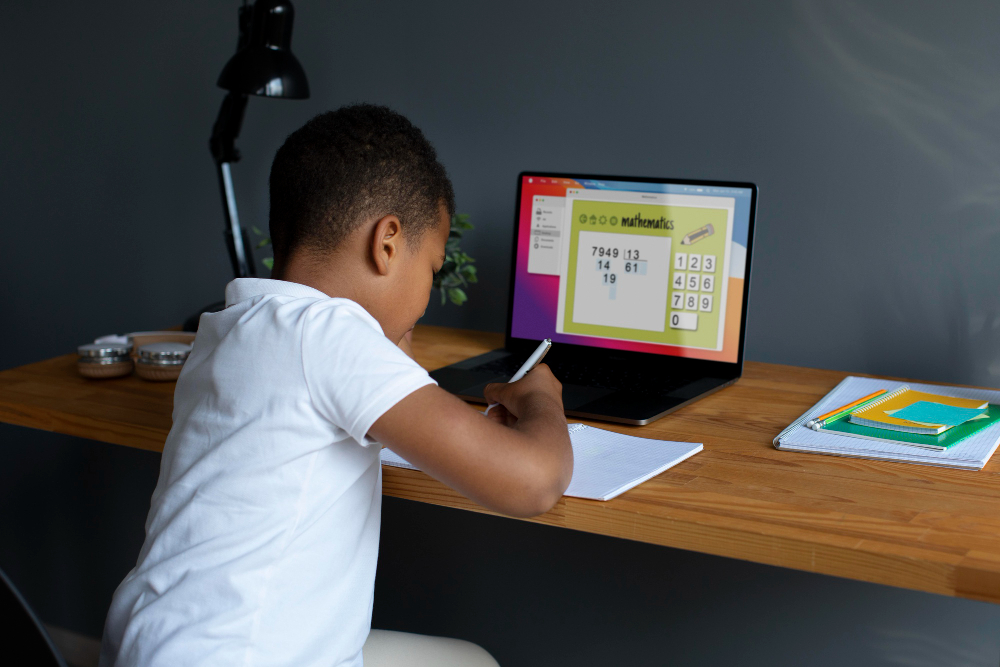
Photo from Freepik
Solving math equations can be boring. It can also be stressful. Both problems are addressed by incorporating gamification. According to one study, game-based learning impacts both cognitive and affective domains. It has a positive influence on engagement, achievement, attitude, interest, and motivation[3].
- Personalized Challenges: AI designs games to suit individual skill levels. These activities progress in terms of difficulty. They can also promote healthy competition among learners as they work to climb leaderboards.
- Real-World Relevance: Games are not just for entertainment. They can also simulate real-life scenarios. It can spark more interest knowing that what students are learning is relevant in their lives.
- Social Interaction: AI can beat boredom by incorporating social elements. Students can collaborate with peers as they solve problems.
Supporting Diverse Learning Needs
AI bridges the gap for students with unique learning challenges. It’s estimated that up to 5% of the global population of school-aged children have learning disabilities. The most common is dyslexia, which accounts for 80% [4]. Instead of using text-heavy outputs, AI can rely on tech-powered audio explanations to make learning math easier for such individuals.
Meanwhile, for students with ADHD, AI platforms strip away distractions. They have a simplified interface and provide bite-sized tasks to increase focus. On the other hand, those with language barriers can also benefit. AI tools may be available in multiple languages to eliminate barriers.
This level of support ensures no student is left behind. Educators observe quiet students gaining confidence as AI tools meet them at their levels. As a result, personalized education is no longer a privilege. Learning disabilities don’t have to be a hindrance to effective math education.
Improving Accessibility
AI dismantles barriers that once made math education exclusive. It democratizes access through inclusive technology. Earlier, we mentioned how it supports students with learning disabilities. Aside from such, accessibility is improved by offering platforms accessible 24/7. Even outside of school, students can continue learning through the right AI platform.
In rural areas and resource-limited educational institutions, AI compensates for missing infrastructure. Offline apps allow access to math tutors even without the internet. In addition, free AI tools for students are also available to deliver personalized learning to cash-strapped students and families.
Empowering Educators
Even with the advent of modern technologies like AI, the role of educators cannot be discounted in personalized math learning. These tools complement their skills. They don’t replace teachers. It’s a strategic ally.
On average, teachers are working 50 hours a week [5]. Marking papers and preparing lesson plans eat up a lot of their time. Many will implement a generic approach to teaching math. Fortunately, AI makes personalization possible.
- Performance Dashboards: They can give teachers a snapshot of how a student performs. It automates the grading process, making it a time-saver. Teachers can instantly identify learning gaps.
- Targeted Intervention: Teachers can use AI to facilitate tailored exercises. This is based on the notion that not all students are the same, reiterating the need for personalized math education.
- Collaboration: AI tools make it easier to foster collaboration. Parents, teachers, and students can work together, even outside of the classroom.
Wrapping Up
The future of math education involves AI. Rigid curricula and resource limitations are addressed by shifting the education landscape with the help of technology. The benefit extends beyond students. Teachers and parents can also reap the many advantages of using AI for personalized math education.