
Security testing today is not failing because of a lack of tools. It is failing because attackers are moving faster than traditional approaches can keep up. If your pentesting still relies on periodic scans, you are only seeing part of the risk.
The shift to AI is already happening. Around 77% of security professionals have embedded AI into their security stack, and 89% believe it will be essential for future cyber defense. This clearly shows that intelligent, automated security testing is no longer optional.
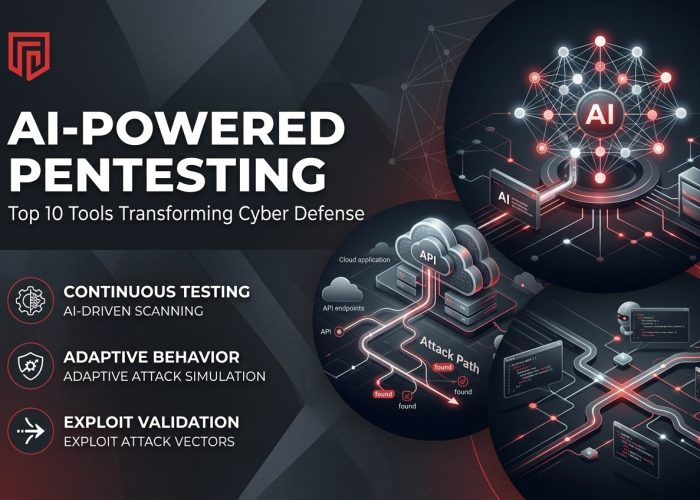
At the same time, modern applications are becoming more complex with APIs, cloud infrastructure, and dynamic workflows. Because of these moving parts, establishing a comprehensive workflow for web app pentesting has become a massive challenge for manual teams. This type of testing relies on safely simulating real-world attacks to find and exploit deep vulnerabilities. Next-generation AI-powered pentesting tools solve this by continuously testing, adapting to live application behavior, and validating real attack paths.
Keep reading till the end to explore each of the tools suggested by security experts after using them first-hand.
Best AI-Powered Pentesting Tool: Quick Overview
| Tool | Core Strength | AI Capability | Testing Type |
| ZeroThreat.ai | Real exploit validation | Agentic AI with adaptive reasoning | Continuous automated web & API pentesting |
| XBOW | Autonomous attack simulation | Multi-agent AI system | Continuous automated pentesting |
| Burp Suite | Depth + flexibility | AI-assisted scanning & automation | Manual + automated testing |
| Synack | Human + AI hybrid | AI-assisted with ethical hackers | Continuous crowdsourced pentesting |
| Strix | Simplicity + automation | AI-driven exploit simulation | Automated pentesting |
| Mindgard | AI system security | AI-focused adversarial testing | AI/ML model pentesting |
| Escape | API-first security | AI-driven API testing | Continuous API pentesting |
| Horizon3 | Attack path validation | Autonomous AI pentesting | Internal, external, cloud testing |
| HexStrike | Speed and scale | AI-powered automation | Automated pentesting workflows |
| FireCompass | Continuous red teaming | AI + ML attack simulation | External attack surface testing |
What Makes AI-Driven Pentesting Tools Different
Traditional pentesting is slow. It depends heavily on human availability, fixed schedules, and manual effort. AI-driven tools change that. They run continuously, adapt in real time, and catch vulnerabilities that manual testing often misses.
The real difference is speed paired with depth. AI models analyze attack surfaces, predict exploit paths, and prioritize risks automatically. No waiting. No guesswork. Just actionable findings delivered faster than any human team could manage alone.
Adoption is growing fast for a reason. According to recent reports, the AI in cybersecurity market is expected to exceed 50.83 billion by 2031. Teams using AI-powered penetration testing tools are reporting fewer blind spots and stronger overall security posture.
Top 10 AI-Powered Penetration Testing Tools in 2026
The best AI-driven security testing tool should detect vulnerabilities without the need to manual configuration. Here are the top AI pentesting tools every security team and expert should know.
1. ZeroThreat.ai
ZeroThreat.ai is an AI-driven penetration testing platform designed to identify real, exploitable vulnerabilities in modern web applications and APIs. It uses agentic AI to simulate attacker behavior, dynamically adapting to application responses while validating actual exploitability and impact. The tool detects over 130k+ critical vulnerabilities, including OWASP Top 10 and CWE Top 25, complex business logic flows, and sensitive data exposure.
By combining rapid CVE mapping, zero-day pattern detection, and automated execution of extensive vulnerability checks, it prioritizes meaningful risk over noise. The platform delivers near-zero false positives through proof-based validation and delivers actionable remediation guidance. Built for speed, depth, and accuracy, ZeroThreat.ai enables security teams to continuously test production environments and uncover critical weaknesses with significantly reduced manual effort.
Key Features of ZeroThreat.ai:
- Exploitability-first vulnerability validation with proof of impact
- 130,000+ vulnerability checks with custom, Burp, and Nuclei open attack template integration
- Automated false positive elimination with verified findings
- Deep API security testing with support for REST, GraphQL, and SOAP endpoints
- Extends Playwright for testing SPAs and complex UIs by navigating through multi-step journey
- CI/CD integration with tools like GitHub Actions, Jenkins, and GitLab for seamless DevSecOps workflows
- AI-powered remediation guidance and audit-ready reports with built-in risk prioritization
Best For: Development teams and security engineers looking for continuous, automated web and API security testing within their existing DevSecOps pipeline.
2. XBOW
XBOW is an autonomous AI pentesting agent designed to find and exploit vulnerabilities the way a real attacker would. It does not just scan. It thinks, probes, and chains vulnerabilities together to simulate actual attack scenarios on web applications.
The tool is built around the idea that traditional scanners miss context. XBOW uses AI to understand the logic of an application, not just its surface. That makes it particularly effective at finding complex, multi-step vulnerabilities that automated tools typically overlook.
Key Features of XBOW:
- Autonomous attack simulation that chains multiple vulnerabilities to reflect real-world exploit paths
- AI-powered reasoning engine that understands application logic, not just known vulnerability patterns
- Continuous and on-demand testing modes for both proactive security and sprint-based reviews
- Detailed attack narratives that show exactly how a vulnerability can be exploited, step by step
- Web application focus with strong coverage of authentication flaws, business logic errors, and injection vulnerabilities
- Minimal configuration needed since the agent adapts to the target on its own
- Integration support for development environments to help teams catch issues before production
Best For: Security teams and red teamers who need an autonomous agent that goes beyond scanning and actually simulates intelligent attacker behavior on web applications.
3. Burp Suite
Burp Suite by PortSwigger is one of the most widely used web application security testing platforms in the world. It has been a go-to tool for pentesters for years, and its AI-powered additions have made it even more capable for modern security workflows.
The platform now includes Burp AI, which brings intelligent assistance directly into the testing workflow. From explaining vulnerabilities to suggesting next steps during active testing, the AI layer reduces friction without taking control away from the tester.
Key Features of Burp Suite:
- Burp Scanner with AI-enhanced crawling and auditing that detects a wide range of web vulnerabilities automatically
- Burp AI assistant that provides in-context explanations and remediation suggestions during live testing sessions
- Intruder and Repeater tools for manual testing and targeted fuzzing with granular control
- Extensive extension support via BApp Store, allowing teams to customize workflows with hundreds of community-built plugins
- Collaborator feature for detecting out-of-band vulnerabilities like blind SSRF and blind XSS
- Detailed scan reports with severity ratings, request evidence, and fix recommendations ready for stakeholders
- Enterprise Edition for large-scale, scheduled, and automated scanning across entire application portfolios
Best For: Professional pentesters, bug bounty hunters, and enterprise security teams who need a comprehensive, battle-tested platform for in-depth web application security testing.
4. Synack
Synack combines AI-powered automation with a vetted global network of security researchers known as the Synack Red Team (SRT). It is not just a tool. It is a managed security testing platform that blends human expertise with intelligent automation to deliver thorough, continuous penetration testing at scale.
What makes Synack different is that AI handles the repetitive scanning work while human researchers focus on complex, logic-based vulnerabilities machines often miss. That combination gives organizations deeper coverage than automated-only solutions and faster results than traditional pentest engagements.
Key Features of Synack:
- Synack Red Team (SRT) of 1,500+ vetted global security researchers working alongside AI-driven scanning
- SmartScan technology that uses AI to continuously discover and prioritize attack surface targets
- On-demand and continuous testing models that fit both scheduled assessments and always-on security needs
- Centralized mission control dashboard for real-time visibility into testing activity and vulnerability status
- Structured vulnerability reports with severity ratings, proof-of-concept details, and fix guidance
- Compliance-ready testing aligned with frameworks like FedRAMP, PCI DSS, and HIPAA
- Secure researcher environment that ensures all testing activity stays controlled, logged, and accountable
Best For: Enterprises and government organizations that need scalable, continuous penetration testing backed by both AI automation and verified human security researchers.
5. Strix
Strix is an AI-powered offensive security platform built to automate penetration testing across networks, web applications, and cloud environments. It is designed to work like an autonomous red team, running attack simulations without requiring manual configuration at every step.
The platform focuses on making continuous security validation accessible. Instead of waiting for quarterly pentests, teams can run Strix regularly to stay on top of new exposures. It is built for speed and consistency, making it a practical choice for security teams managing large or complex environments.
Key Features of Strix:
- Autonomous red team simulations that map, probe, and exploit vulnerabilities across the full attack surface
- Multi-environment coverage including internal networks, web applications, and cloud infrastructure
- AI-guided attack path analysis that identifies how vulnerabilities connect and which ones pose real risk
- Continuous testing capability so security posture is validated on an ongoing basis, not just once a quarter
- Actionable remediation guidance tied directly to each finding for faster resolution
- Low-noise reporting that filters out false positives and surfaces only verified, exploitable issues
- Lightweight deployment with minimal setup required to get testing underway quickly
Best For: Security teams that need an autonomous, continuously running offensive security platform to validate defenses across networks, applications, and cloud environments.
6. Mindgard
Mindgard is an AI security testing platform built specifically to address risks in artificial intelligence systems. While most pentesting tools focus on traditional applications, Mindgard targets AI and machine learning models, APIs, and the infrastructure surrounding them.
As organizations deploy more AI-powered products, the attack surface grows in new directions. Mindgard helps security teams understand and test those risks. It covers threats like adversarial attacks, model extraction, data poisoning, and prompt injection, which traditional security scanners simply are not built to handle.
Key Features of Mindgard:
- AI-specific threat testing covering adversarial robustness, model theft, data poisoning, and prompt injection attacks
- Automated red teaming for LLMs and generative AI applications to surface misuse and manipulation risks
- Continuous AI security monitoring that tracks model behavior and flags anomalies over time
- Integration with existing MLOps and DevSecOps pipelines for security testing throughout the AI development lifecycle
- Comprehensive risk reporting mapped to AI security frameworks like OWASP Top 10 for LLMs and MITRE ATLAS
- Support for both proprietary and third-party AI models, including models accessed via API
- Actionable findings that help teams prioritize and fix AI-specific vulnerabilities without needing deep ML expertise
Best For: Security teams, AI engineers, and enterprises building or deploying AI and machine learning systems who need dedicated tools to test and monitor AI-specific attack surfaces.
7. Escape
Escape is an AI-powered API security testing platform focused entirely on discovering and fixing vulnerabilities in APIs before attackers find them. It is built for development and security teams that ship fast and need security testing to keep up with that pace.
What sets Escape apart is its deep understanding of API logic. It does not just test endpoints. It explores business logic flaws, authentication weaknesses, and data exposure risks that standard scanners miss. The result is more accurate findings with far less noise to sort through.
Key Features of Escape:
- AI-driven API discovery that automatically maps all exposed endpoints, including undocumented and shadow APIs
- Business logic testing that goes beyond surface-level scanning to find context-aware vulnerabilities
- Support for REST, GraphQL, and gRPC APIs with tailored testing approaches for each protocol
- CI/CD pipeline integration with GitHub, GitLab, and other DevOps tools for security testing at every build
- Intelligent false positive reduction so teams spend time fixing real issues, not chasing dead ends
- Detailed developer-friendly reports with code-level remediation steps that are easy to act on
- Compliance coverage mapped to OWASP API Security Top 10 for audit and regulatory readiness
Best For: Development and security teams that build and manage APIs and need fast, accurate, developer-friendly security testing integrated directly into their delivery pipeline.
8. Horizon3
Horizon3.ai is an autonomous penetration testing platform built around its NodeZero engine. It continuously simulates real-world attacks across the entire network environment to find and validate exploitable vulnerabilities before adversaries do.
NodeZero does not just scan for known CVEs. It chains together weaknesses across systems, credentials, and configurations to show exactly how an attacker would move through an environment. That attack-path perspective gives security teams a much clearer picture of actual risk versus theoretical exposure.
Key Features of Horizon3.ai:
- NodeZero autonomous pentest engine that chains vulnerabilities to simulate real multi-step attack paths
- Continuous and on-demand testing with no need for dedicated pentest staff to operate or oversee it
- Credential and identity attack testing to surface privilege escalation and lateral movement risks
- Fix-and-verify workflow that allows teams to remediate a finding and immediately retest to confirm it is resolved
- Internal and external network coverage including Active Directory, cloud environments, and on-premises infrastructure
- Detailed evidence-backed reports showing exactly how each vulnerability was discovered and exploited
- Rapid deployment with no agents required, getting testing underway within hours of setup
Best For: IT and security teams in mid-market and enterprise organizations that need continuous, autonomous network penetration testing with clear, evidence-based attack path reporting.
9. HexStrike
HexStrike is an AI-powered penetration testing platform designed to automate offensive security testing across web applications, APIs, and network infrastructure. It is built for security teams that need consistent, repeatable testing without relying entirely on manual engagements.
The platform focuses on giving security professionals a practical offensive toolkit powered by AI. It handles the heavy lifting of reconnaissance, vulnerability discovery, and exploitation attempts, while keeping the security team in control of scope, depth, and reporting. It is a smart middle ground between full automation and manual testing.
Key Features of HexStrike:
- AI-powered reconnaissance and attack surface mapping that identifies targets and entry points automatically
- Automated exploitation attempts across web application, API, and network attack vectors
- Customizable testing scope so teams can define boundaries and focus areas for each engagement
- Continuous testing mode for ongoing security validation between scheduled pentest cycles
- Risk-based vulnerability prioritization that ranks findings by exploitability and potential business impact
- Clear, structured pentest reports formatted for both technical teams and executive stakeholders
- Integrations with popular security and project management tools for streamlined remediation workflows
Best For: Security teams and pentest professionals looking for an AI-powered platform that automates offensive testing across web, API, and network environments with flexible scope control.
10. FireCompass
FireCompass is a continuous automated red teaming and attack surface management platform. It discovers an organization’s external attack surface and then actively tests it using real-world attack techniques, giving security teams a persistent, outside-in view of their exposure.
The platform mirrors how an actual threat actor would approach a target. It starts with reconnaissance, maps the digital footprint, identifies entry points, and then launches safe but realistic attack simulations. That end-to-end approach makes it one of the more thorough options for external security validation.
Key Features of FireCompass:
- Continuous external attack surface discovery that maps assets including domains, IPs, cloud services, and exposed credentials
- Automated red team campaigns that simulate multi-stage attacks using real-world tactics, techniques, and procedures (TTPs)
- Dark web and threat intelligence monitoring to flag leaked credentials and data relevant to the organization
- Risk-ranked findings that reflect actual exploitability so teams can focus on what matters most
- Safe breach and attack simulation that tests defenses without disrupting production systems
- Detailed attack chain reports showing the full path from initial access to potential impact
- Integration with SIEM, ticketing, and vulnerability management tools for faster response and tracking
Best For: Enterprise security and red teams that need continuous, outside-in attack surface management combined with automated red teaming to validate external defenses on an ongoing basis.
Wrapping Up
AI-powered pentesting tools are redefining how security testing is approached today. They move beyond detection and focus on validating real risks, helping teams understand how vulnerabilities can actually be exploited in modern application environments.
The key takeaway is simple. Speed, accuracy, and continuous testing now matter more than periodic assessments. Tools that combine intelligent automation with real-world attack simulation offer better visibility into evolving threats and reduce the chances of overlooked vulnerabilities.
Choosing an AI-driven pentesting tool depends on your application stack, testing needs, and team maturity. What matters is adopting a solution that keeps pace with change, validates real risks, and strengthens security with consistent, reliable insights.