
As the popularity of cryptocurrency increases, the use of the utility token has become more mainstream. These tokens have evolved to power services, enable transactions, and be useful in many other aspects. Utility coins have moved beyond speculation, from providing in-game purchases—Axie Infinity (AXS)—and the initiation of play-to-earn models such as Sandbox (SAND) and others. However, it doesn’t stop there; utility tokens have become the foundation for financial services on the decentralized ecosystem without involving banks.
Knowing what the top utility tokens are is essential for active traders as well as investors who like to hold on to crypto for the long haul. Ask a seasoned trader or investor of the crypto realm, and they’ll tell you that utility coins are an essential asset when considering crypto portfolio management.
If we have piqued your interest, then join us as we’re just getting started; in this blog we’ll be looking at a frequently asked question: “what are the big five tokens?” The tokens mentioned within have the telltale signs for gains and adoption this year. So, without further ado, let’s begin.
Ethereum (ETH)
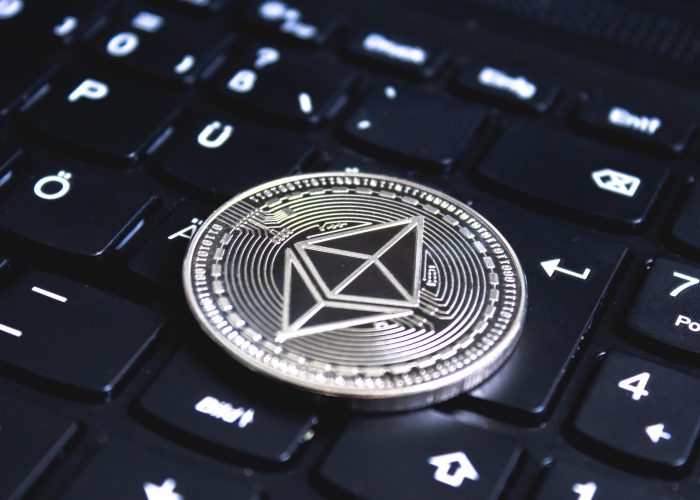
When it comes to smart contracts, nothing leads the game except Ethereum. Whether they are decentralized applications (dApps) in finance, gaming, NFTs, or others, the majority of their foundation will be based on Ethereum. As one of, if not, the best infrastructure networks in the crypto realm, Ethereum’s native token, ETH, is used for gas “transaction fees” and to add security to the network through the process of staking.
Its new Pectra upgrade is on the horizon, which is focused on performance optimizations that will drastically increase its transaction capacity. This upgrade is predicted to make the Ethereum utility token very attractive for enterprise and institutional functioning. Plus, let’s not forget, Ethereum still commands the largest share when it comes to DeFi value. As of early 2025, it accounted for roughly 57% of all value locked in DeFi protocols, far more than any other DeFi blockchain.
The Sandbox (SAND)
When we talk about The Sandbox, we talk about the use of crypto utility coins in the realm of gaming—specifically blockchain gaming. In this metaverse platform, people can create, own, and make money off experiences in the virtual world. The SAND token is the utility coin for this cryptosystem. Facilitating in-game purchases, it is also used for governance and staking. In the gaming/metaverse sector, SAND drives a play-to-earn economy and incentivizes creators and players in The Sandbox.
The sandbox is seeing promising user engagement through its many events. For example, in late last year’s Alpha Season 4, more than 550,000 unique players joined in. All together 1.4 million hours were spent in the game, with more than 49 million quests getting completed. Looking at these promising figures, it is poised to gain traction as the metaverse utilization grows.
Chainlink (LINK)
When it comes to oracle networks, Chainlink looks promising. It connects real-world data and off-chain computation to work on smart contracts. Its token, LINK, is utilized by users to make payments to node operators for data feeds and services. However, node operators need to stake LINK as collateral to ensure reliability. It is an essential infrastructure provider for dApps, from providing price feeds to randomness to gaming NFTs to allowing cross-chain messaging. In essence, it is the utility token running the data and interoperability layers of blockchain ecosystems.
Last year, the global banking messaging network – SWIFT, worked with Chainlink to try out its cross-chain functionality. Using this Chainlink feature, it linked well-known financial institutions working on multiple blockchains. The trial was successful, allowing banks such as Citi and BNY Mellon, among others, to move virtual assets across blockchains. With a 2025 market cap of around $10 to $13 billion, it falls within the top 30 crypto projects and should be a fruitful addition to any savvy investor well-versed in crypto portfolio management.
AAVE (AAVE)
In the world of crypto, Aave is the leader of DeFi lending protocols. These protocols allow people to lend and borrow crypto assets. Description & Sector: Aave is a leading DeFi lending protocol that allows users to borrow and lend cryptocurrencies in a decentralized manner. Its native token, AAVE, is used for governance and can also be staked for safety module rewards. Aave pioneered features like flash loans and cross-market liquidity, and it now operates across multiple chains. As a DeFi sector token, AAVE derives value from the protocol’s usage (fees) and its role in governing one of the largest lending platforms.
Aave experienced record growth in 2024, signaling strong momentum into 2025. It reached $33.4 billion in deposits (liquidity)—surpassing even 2021 bull market levels. This growth was fueled by expanding to new networks and assets. By integrating with multiple chains (Ethereum L2s like Arbitrum, plus BNB Chain, Polygon, etc.), Aave broadened its user base.
Artificial Superintelligence Alliance (ASI)
A wildcard of sorts, but being based on AI, ASI has the telltale signs of success not only in this year but also beyond it. It was created when three well-known projects, i.e., Fetch.ai, SingularityNET, and Ocean Protocol, joined hands. This led to them unifying their tokens into one single coin: the ASI token. If looked at deeply, this is a powerful partnership poised for success by playing on each partner’s strengths. For example, Fetch.ai’s autonomous agent platform, SingularityNET’s decentralized AI marketplace, and Ocean Protocol’s data exchange network.
In 2025, the alliance is expected to leverage these synergies to create powerful new applications.
Utility tokens vs. security tokens—what’s the difference?
We’re pretty sure after going through the top 5 utility coins above, you have a solid idea about the purpose of utility coins. However, we haven’t really talked about security tokens. So, if you’re pondering the difference when it comes to utility tokens vs. security tokens. We’ll break it down for you:
Utility tokens:
- Enable transactions; allow you to purchase a product or service within a particular blockchain system.
- Are largely unregulated
- Do not denote any ownership of a project.
Security tokens:
- They are more of a proof of ownership or investment in an asset in the real world.
- Is regulated (e.g., federal securities regulations)
- Values are based on the valuation of the company or asset in real life that issued the token.
If you’re wondering why we would bring this up, it’s because understanding the difference between the two is critical when it comes to building a compliant and well-structured portfolio of digital assets, i.e., it is essential for effective crypto portfolio management.
Closing Thoughts
We have reached the end of our top 5 utility token article. However, we need to give a disclaimer of sorts. In the world of crypto, things happen much faster than in other markets. So if you are thinking, “What is the best token to buy right now?” you shouldn’t just follow the hype; instead, do your homework and carry out due diligence. The top 5 tokens we have mentioned are based on several factors; you can take them as a starting point, but it’s not intended as financial advice.