
New technologies rapidly penetrate into the educational sector. The learning process becomes more engaging, productive, and tailored to a student. For teachers, emerging edtech technologies reduce workload and help to grow their professional skills.
In this post, we want to uncover what is shaping the educational app development right now. Explore these educational app trends for 2024 and get some ideas on how to implement them into your business!
AI-Powered Personalized Learning Paths
Interactive educational app development is on the rise. AI-powered personalized learning systems have revolutionized the way students engage with educational content. These systems continuously assess student performance, identifying strengths and weaknesses, and adjust the difficulty or type of content accordingly.
For example, AI can analyze errors students make and automatically generate corrective exercises or adjust the pace of lessons to provide more practice in challenging areas. In some cases, AI can even facilitate interaction between students, prompting peer discussions or collaborative tasks based on their learning needs.
For teachers, these systems enable them to focus on more complex tasks, while AI handles repetitive or personalized content generation. Of course, AI models help to generate new study materials.
Real-life example: Duolingo uses AI to adjust language lessons based on the learner’s progress, reinforcing weaker areas and advancing through mastered material, ensuring a balanced, efficient learning path.
Neuroadaptive Learning
Neuroadaptive learning incorporates biometric data to monitor both the cognitive and emotional states of students. Using sensors or software that tracks factors like attention, stress, or frustration, these systems can adapt content delivery in real-time. This dynamic adjustment ensures that students are always engaged.
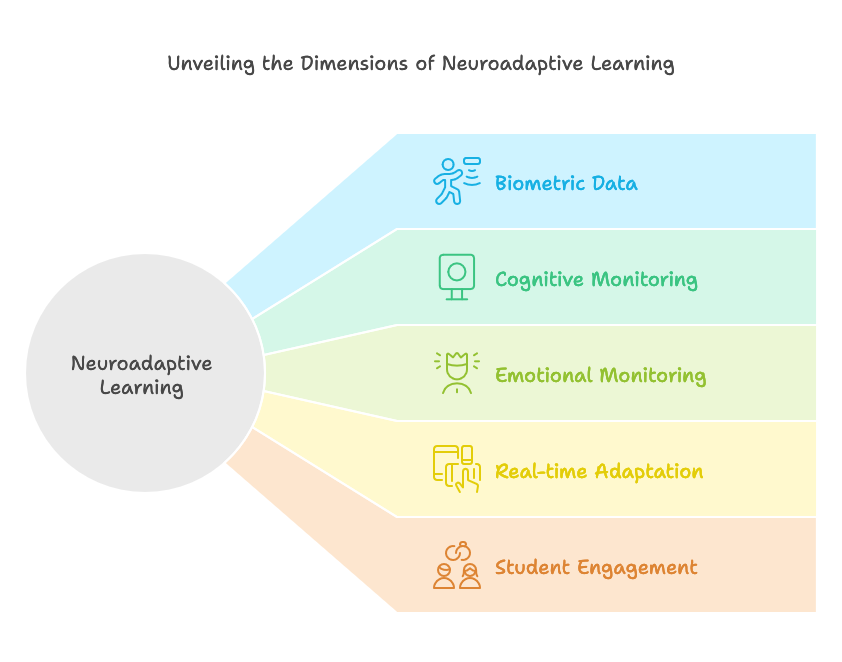
Real-life example: To ensure that the content is always in line with the learner’s level of focus, CogniFit uses neuroadaptive learning. It modifies activities based on a student’s cognitive performance and emotional state.
Voice-activated Learning Assistants
AI-powered voice assistants bring education to life with just a voice command. Students can interact with learning apps hands-free, asking questions and getting instant answers. No typing, no searching — just speak, and the assistant responds. These tools make learning quicker and more interactive. They can explain complex concepts, guide students through problems, and even suggest next steps.
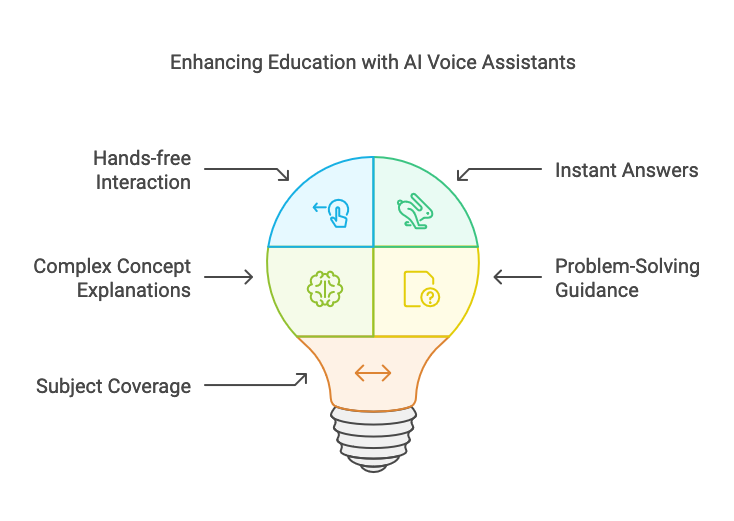
Real-life example: Google Assistant and Amazon Alexa can answer questions across subjects, offering explanations and providing interactive learning without the need for typing. It’s a fast, efficient way to access information and improve understanding.
Microlearning
Microlearning delivers content in small, digestible chunks. It’s all about short bursts of focused learning. This method targets specific concepts, making them easier to understand and remember. It’s perfect for modern students who need flexibility and fast access to information. The bite-sized approach helps reinforce memory by concentrating on one idea at a time. No overwhelming content. Just quick lessons that stick.
By breaking down complex topics, microlearning ensures students stay engaged without feeling overloaded. It’s efficient, effective, and tailored to short attention spans.
Real-life example: Duolingo uses microlearning to teach languages in short, focused lessons. Students complete quick lessons in under 5 minutes, helping them master individual words or phrases in easy, manageable sessions.
Social Learning
Another custom educational app solution is social learning. Social learning is all about connecting students with each other to create a sense of community and collaboration. Unlike traditional, isolated learning experiences, social learning thrives on interaction, where students learn from instructors and teach and inspire one another. By fostering discussions, resource sharing, and teamwork, these platforms empower students to solve problems together and deepen their understanding.
Real-life example: Edmodo brings students together in an interactive environment where they can post discussions, share study materials, and work on collaborative assignments, fostering an active community of learners.
Blockchain in Education
Although blockchain is often associated with cryptocurrencies, it has a wide range of educational applications. Blockchain is transforming the storage and verification of academic qualifications by offering safe, unchangeable records. Imagine a society in which transcripts, degrees, and certificates are digitally encrypted to prevent tampering and guarantee universal recognition. Academic accomplishments can also be tracked with unprecedented transparency thanks to this decentralized approach.
Furthermore, blockchain can provide safe peer-to-peer learning systems where accomplishments or credits are accrued and documented in an effective, transparent way. Trust and removing obstacles in education are more important than security alone.
Real-life example: Learning Machine issues safe digital diplomas and certificates using blockchain technology, guaranteeing that academic accomplishments are globally verifiable and free from fraud or deception.
Top Technologies to Use for Students and Teachers
Let’s explore some tools that you can integrate in your e-learning or educational app. Here are some of them:
Learning Management System (LMS) frameworks
Incorporate LMS platforms like Moodle or Canvas API to manage courses, assignments, and user progress seamlessly.
Video conferencing integration
Integrate APIs like Zoom SDK, Google Meet API, or Jitsi for real-time video classes, discussions, and webinars.
Gamification libraries
Use tools like GameSalad or Unity3D to add gamified elements such as quizzes, badges, and leaderboards to boost engagement.
Content creation and sharing
Embed tools like H5P for interactive content creation, including quizzes, drag-and-drop activities, and interactive videos.
Language learning support
Integrate APIs such as Duolingo for Developers or Rosetta Stone APIs for language training modules.
Analytics and reporting
Use tools like Google Analytics for Firebase or Power BI to track user engagement, course completion rates, and performance metrics.
Cloud storage and collaboration
Leverage Google Drive API or Dropbox API for storing and sharing educational resources securely.
Wrapping Up
Trends are shaping the way people use mobile apps for education. Adapt to new technologies and stay competitive with your custom educational app solutions!