
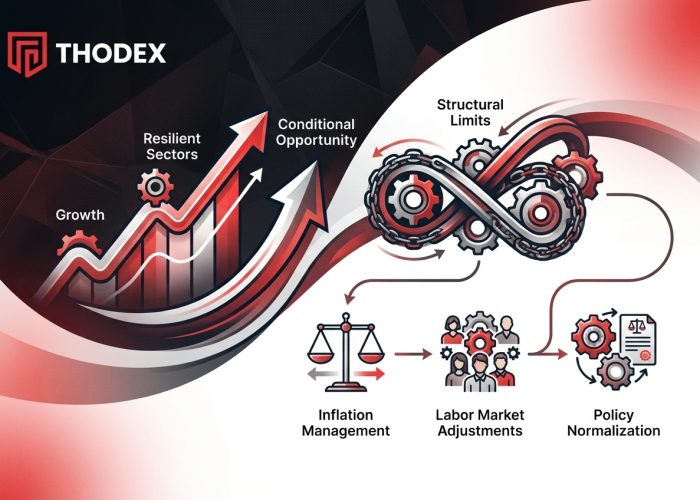
The U.S. economy is moving toward 2026 with mixed signals. Growth has proven resilient in some sectors, yet structural limits are becoming harder to ignore. Inflation management, labor market adjustments, and policy normalization are reshaping expectations. Opportunity still exists, but it feels more conditional than expansive.
This tension shows up not only in macro indicators but also in how individuals assess financial risk and opportunity. Market conversations increasingly reference practical experience and peer feedback, including discussions shaped by users reviews of Telegram crypto signals for Binance, Bybit, OKX & Bitmex. These perspectives illustrate how economic uncertainty influences behavior far beyond traditional markets.
Growth That Requires Precision
Economic growth in 2026 is less about momentum and more about calibration. Expansion continues, yet it demands careful allocation. Businesses face higher financing costs and tighter margins. Consumers adjust spending patterns. Productivity gains matter more than scale.
This environment rewards efficiency. It also exposes fragility. Strategies that relied on cheap capital or broad demand feel less reliable. As a result, growth becomes selective rather than uniform.
Constraints Are Becoming Structural
Some constraints are cyclical, but others are structural. Demographic shifts affect labor availability. Infrastructure needs compete with fiscal limits. Regulatory complexity increases the cost of compliance across industries.
These factors do not halt progress. They narrow it. Economic flexibility remains, though it is exercised within clearer boundaries. Adaptation replaces acceleration.
Financial Behavior Is Reflecting the Shift
As conditions tighten, financial behavior changes. Decision-making becomes more conservative. Risk assessment grows more granular. Short-term optimism gives way to longer planning horizons.
This shift influences how people engage with markets, savings, and alternative assets. The economy feels less forgiving, but more transparent. Clarity replaces abundance.
Why 2026 Feels Like a Decision Point
The year 2026 stands out because gradual changes converge. Policies settle. Markets adjust. Expectations realign. The economy does not flip overnight, yet the cumulative effect becomes visible.
Opportunity remains present, but it is earned through discipline. Constraints persist, but they guide behavior rather than suppress it. The balance between the two defines the outlook.
A Measured Path Forward
The U.S. economy in 2026 is unlikely to be defined by extremes. It will neither boom unchecked nor stall completely. Instead, it will operate within a narrower corridor that favors preparedness.
For those who adapt, opportunity exists. For those who don’t, constraints feel heavier. The difference lies not in the economy itself, but in how it is approached.