In a surprising turn of events, blockchain analytics firms and on-chain investigators have reported significant movements of approximately $20 million in cryptocurrencies from addresses linked to the U.S. government. The activity has raised concerns within the crypto community about the potential compromise of government-controlled wallets.
Suspicious Transactions Detected
Arkham Intelligence, a prominent blockchain analytics provider, was among the first to identify the unusual on-chain transactions on October 24. The firm reported that a wallet associated with the U.S. government had transferred substantial amounts of Ethereum (ETH), Tether (USDT), Circle USD Coin (USDC), and aUSDC (Aave’s interest-bearing USDC) to a new address.
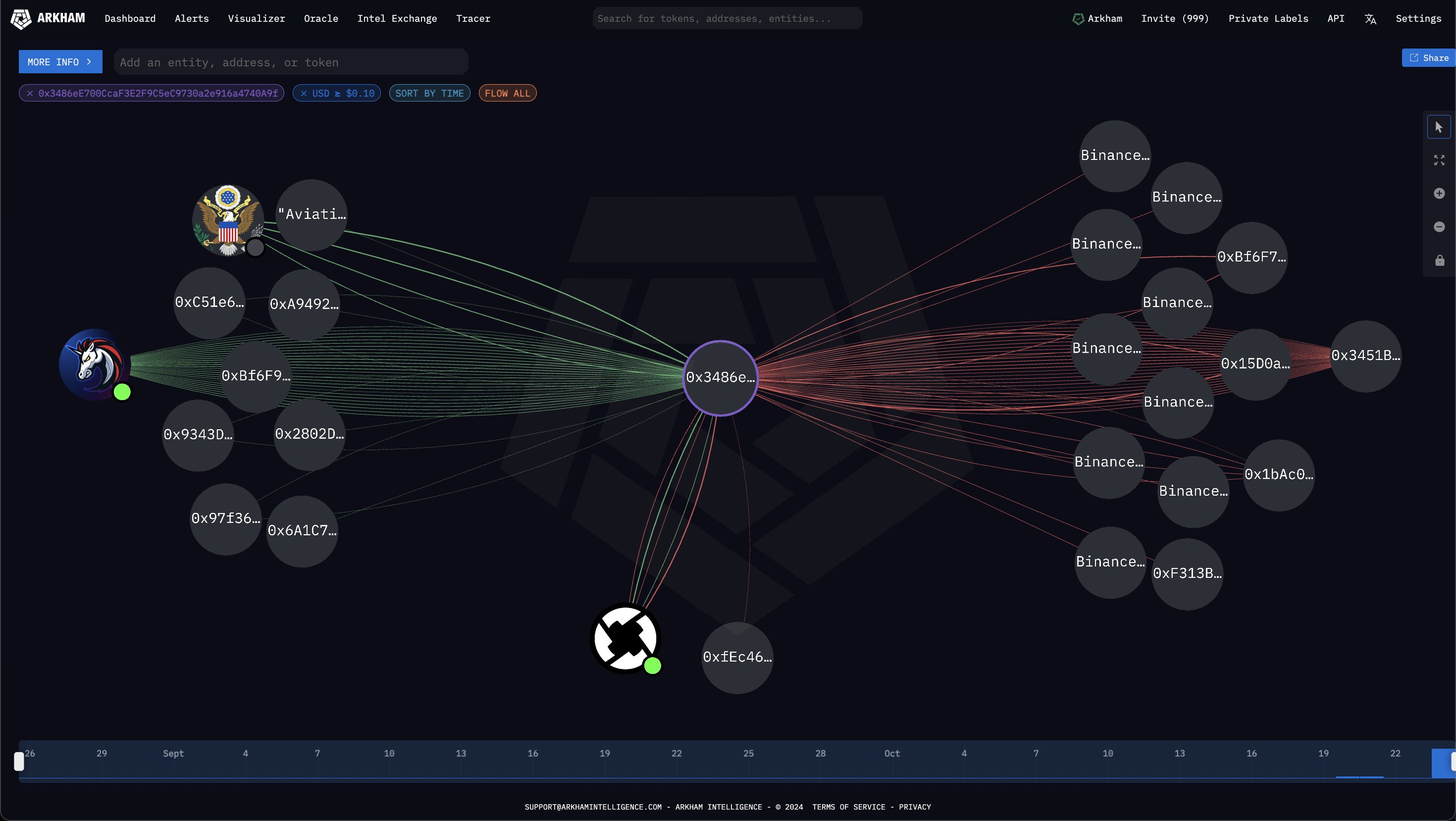
“An address we have linked to the U.S. government, 0xc9E6…, has moved $20 million in assets to another wallet, 0x3486…” Arkham stated in its report. “These funds include cryptocurrencies seized in relation to the Bitfinex hack.”
Renowned on-chain analyst ZachXBT corroborated the findings, noting that the receiving address appeared to be liquidating the assets for ETH and possibly laundering the proceeds through services associated with money laundering activities.
Connections to the Bitfinex Hack
The wallets in question are believed to be holding funds seized from the infamous 2016 Bitfinex hack. In that incident, hackers Ilya Lichtenstein and Heather Morgan allegedly stole around 119,756 Bitcoin, worth approximately $8 billion at today’s prices, from the cryptocurrency exchange Bitfinex. The U.S. Department of Justice later recovered a significant portion of the stolen assets.
Court documents have identified several addresses involved in the seizure of the Bitfinex funds. The transferring address, 0xc9E6…, reportedly received assets from multiple wallets named in these legal documents, strengthening the link between the current transactions and the historic hack.
Possible Security Breach or Strategic Move?
The sudden movement of funds after eight months of inactivity has led to speculation about the motives behind the transfers. Some experts suggest that the wallets may have been compromised by unknown hackers who are now attempting to launder the stolen assets.
“The attacker has already begun laundering the proceeds through suspicious addresses linked to a money laundering service,” Arkham suggested.
However, others propose that the U.S. government might be reorganizing the seized assets or preparing to liquidate them through appropriate channels. The use of decentralized finance (DeFi) platforms like Aave for holding and moving funds is notable, as it indicates engagement with advanced crypto financial services.
Community Reactions and Impact
The crypto community has responded with a mix of concern and curiosity. The potential compromise of government wallets could have significant implications for the security protocols employed in handling seized digital assets.
“Why is the U.S. government interacting with DeFi platforms, and what does this mean for asset security?” questioned one industry observer on social media.
The situation also highlights the challenges authorities face in managing and securing confiscated cryptocurrencies, especially given the transparent nature of blockchain transactions.
Awaiting Official Confirmation
As of now, there has been no official statement from U.S. government agencies regarding the transactions or any potential security breach. The ambiguity surrounding the activity has left room for various interpretations.
Industry analysts are closely monitoring the addresses for further movements. The incident underscores the need for robust security measures in handling digital assets, even for government entities.
Background: The Bitfinex Hack and Aftermath
The Bitfinex hack remains one of the largest cryptocurrency thefts in history. The alleged perpetrators, Lichtenstein and Morgan, were arrested in 2022, and federal prosecutors have since sought substantial prison sentences. The recovery of the stolen Bitcoin by the Department of Justice was a significant victory, showcasing the potential for law enforcement to track and reclaim digital assets.
The management of the recovered funds has been a subject of interest, with discussions on how proceeds from seized cryptocurrencies are handled by government bodies.
Conclusion
The recent movement of $20 million in cryptocurrencies from U.S. government-linked wallets has sparked debate and concern within the crypto community. Whether this activity signifies a security breach or a strategic decision by authorities remains to be seen. Stakeholders continue to watch the developments closely, awaiting clarification from official channels.