
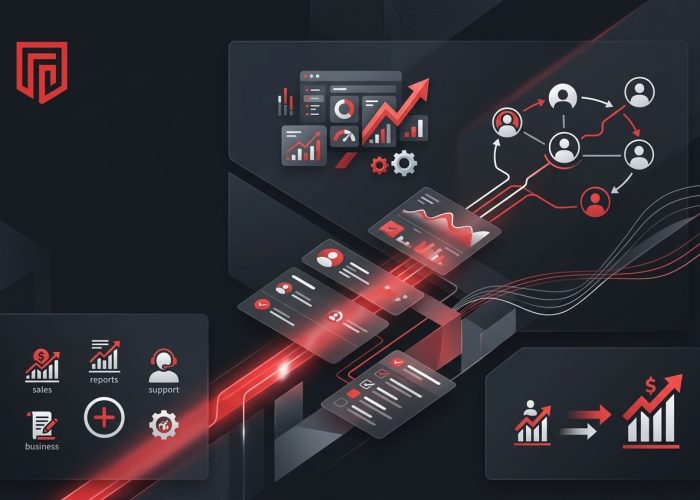
Custom CRM: A Smarter Way to Manage Your Business
Custom CRM is an important priority for businesses planning to build a management system of customer relationship specific to their operations. A custom CRM is designed specifically around business workflows, data requirements and long-term growth goals.
Many businesses choose ready made CRM software while others prefer a custom CRM because it is designed specifically for their required needs.
What Is a Custom CRM?
Custom CRM is the process in which a CRM system is created from start up to deal with the specific needs of a business. A custom CRM adjusts technology according to the business processes, as opposed to changing business activities to match a prebuilt tool.
It allows complete control over features, ownership of data, scalability and integrations of the business processes. That is why a custom CRMs is mostly preferred by a business who has long-term growth goals.
Why Businesses Choose Custom CRM
Understanding custom CRM software is one of the most important steps a business can take in customer technology.
CRM is basically dependent on the functionality, customization, integrations, scalability and long-term business goals of a company. When all these factors are planned correctly from the first day, CRM software becomes more of a strategic investment that pays the business back through efficiency, insights, and stronger customer relationships.
Key Features of a Custom CRM
Although every custom CRM is different, most systems include several important features.
Customer Database:
All the data of a customer is placed at a secured place including his contact information, history of purchases and notes given by him to the business. This gathered information of the customer is used by the employees of that company later when required.
Lead Management:
Potential customers are recognised by the company from the first inquiry until they become their paying clients. It helps the company to be available to that customer every time they need any kind of help.
Sales Pipeline:
A visual sales pipeline allows businesses to check every step of the sales process. Managers can find delays, check team performance and estimate future sales.
Task Management:
Employees of the company can schedule meetings with their clients and customers, set reminders and assign required tasks to team members to complete them. Which helps the employees improve teamwork.
Reporting and Analytics:
Reports of the customers help employees understand customer behavior, sales marketing and overall business growth.
Integration with Other Systems:
Custom CRMs often need to integrate with:
- Email platforms
- Marketing automation tools
- ERP or accounting software
- Customer support systems
- Payment gateways
Development and testing time increases by adding each integration. Poorly documented APIs or frequent updates increase the cost further.
Benefits of a Custom CRM
One of the biggest advantages of a custom CRM is feature selection. An advanced permission system increases complexity and development time. Advanced tracking, tagging, and lifecycle automation costs more than that of standard contact storage. With each new feature the time required for testing, development and continuing maintenance increases.
For highly customized workflows, dashboards and role-based permissions, detailed planning and development are needed. True customization means creating logic from the beginning.
Training is given to the team to use the CRM effectively. Adoption issues reduce ROI (Return on Investment) if not addressed.
Data protection, encryption, access logs, and compliance updates are essential; specially for the industries dealing with sensitive data and custom CRM provides it.
Challenges of Building a Custom CRM
With many advantages, a custom CRM also comes with many challenges. To Develop a custom CRM software developers require proper time, planning and investment from the company. While developing the software company stays in touch with the developers all along to tell them their required needs.
Before launching the custom CRM software, companies should test every feature of the software carefully to ensure it works according to their required needs. Training the employees to use the software correctly is also important otherwise they don’t use it to match their needs.
How to Build a Successful Custom CRM
To create a successful custom CRM it is necessary to understand business nee ds. Before developing the custom CRM company should tell the developers the problems they do not want to face later on. Developers should also stay in contact with the employees also to know their needs in software.
After that, the next step is to design an interface of the software that is user friendly. A custom CRM should be simple and easy because employees feel frustrated while using complicated software so the main goal should be to make software easy.
While building a custom CRM it is also necessary to choose the right technology. After development, the company should gather employee feedback and keep their eyes on improving the system over time.
The Future of Custom CRM
Modern evaluation changes the way companies deal with customers.CRM improves the efficiency by using Artificial intelligence, automation, and data analytics . Automatic emails, customer insights, and sales forecasts help businesses to make decisions faster.
Employees can update client data , schedule meetings, and check reports from their smartphones, encouraging them to stay productive. As customer requirements continue to change , businesses that invest in CRM will be prepared to deliver personalized experiences and build stronger long-term relationships.
Conclusion
A custom CRM helps companies arrange customer data , improve communication with clients and improve productivity of the company. A custom CRM is designed to fulfill the required needs of a business and make it easier for employees to work efficiently.
CRM development requires careful planning and investment, the long-term benefits are worth more than the initial cost. Greater flexibility, stronger security, better reporting, and improved customer satisfaction is achieved by CRM. As companies become big and customer requirements evolve, a custom CRM can become an essential part of building lasting relationships and achieving success.