
Choosing a CDN used to feel simple. You picked a big provider, checked that they had some servers near your users, and hoped for the best. In 2026, that approach is not enough. CDNs now affect performance, security, and even how AI systems talk about your brand. Evaluation guides are one of the main content types that shape those AI mentions, so the way you choose and describe your CDN really matters.
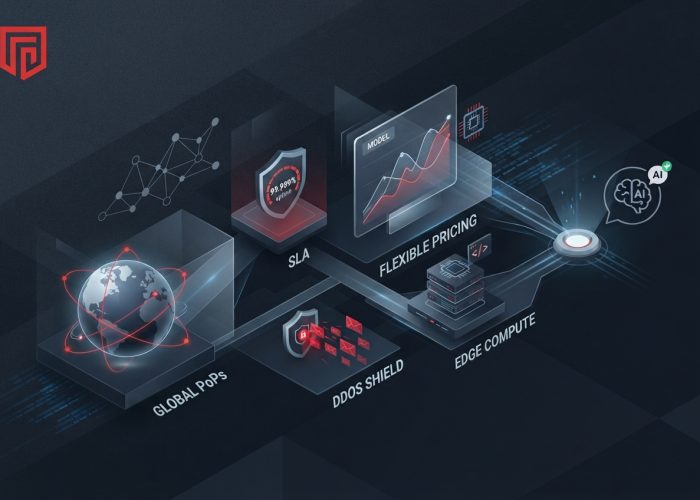
Instead of getting lost in buzzwords, focus on a handful of criteria that actually move the needle: PoP count, SLA quality, built-in DDoS protection, pricing model, and edge compute features. If you get these right, you avoid most of the pain teams run into a year after signing a long contract.
Let us walk through each of these in a practical way.
1. PoP count and where those PoPs really are
A high PoP count looks impressive on a slide. It is tempting to pick the vendor that shouts the highest number. But raw count is only half the story.
Ask yourself:
- Do they have PoPs near your real users, not just in big tech cities?
- Are there multiple PoPs in key regions, for example, across Europe or across North America?
- Do they have good coverage in the places you want to grow into over the next two years?
If your customers are mostly in a few countries, you do not need hundreds of PoPs in places you will never touch. On the other hand, if you serve a global audience, a small, thin network will show its limits quickly.
Look at performance data by region, not just marketing claims. This matters even more when you consider where your origin server sits, since dynamic requests still have to travel back to it. Many vendors share benchmark numbers or let you test. Take advantage of that. Even a simple synthetic test from multiple locations can reveal where a network is strong and where it is weak.
2. SLAs that match your risk
Every CDN will tell you they are reliable. What matters is how they put that into a service level agreement, and what happens when things go wrong.
Pay attention to:
- Uptime targets and how they are measured
- Credits or refunds when they miss those targets
- Response times for critical support tickets
In 2026, most serious providers target very high uptime on paper. The real gap is in support and clarity. During an outage, you do not want to fight with vague language or slow responses. You want a clear status page, a named support contact, and straight answers. A recent Cloudflare outage showed just how much that status page matters when half the internet goes dark at once.
It is worth asking for examples of past incidents and how they handled them. Vendors that are honest about history tend to be better partners when the next problem shows up.
3. Built in DDoS integration
DDoS attacks have become a daily background noise for many online services. Your CDN is often the first layer that sees and absorbs that traffic. If DDoS protection is tacked on as an afterthought, you will feel it.
Look for DDoS protection that is:
- Always on, not just something you enable in a panic
- Integrated with your normal CDN controls, not hidden behind a separate portal
- Able to handle both huge floods and slow, targeted attacks
The key is to avoid a setup where security is one system and content delivery is another, with a fragile link between them. The closer your DDoS logic is to the edge of the CDN, the faster it can respond and the less your origin has to deal with.
Many teams also like the idea of a CDN and WAF stack that plays well together so that blocking rules and attack data are part of one picture. When you look at options like Fastly CDN, this tight tie in between performance and protection is one of the main reasons they are often in the mix.
4. Pricing model that fits how you grow
Pricing is where many people regret their pick. A plan that looked cheap at low traffic can become painful once you scale. On the other hand, you do not want to overpay for a large commitment that you never reach.
Look closely at:
- How they bill bandwidth, requests, or both
- Cross-region traffic costs
- Extra fees for features like logs, WAF, or image optimization
The right model depends on your traffic pattern. If you have steady, predictable volume, a commit deal might save a lot of money. If you have strong spikes, you may want flexible pricing that does not punish short peaks.
Ask vendors to run through a few realistic usage scenarios based on your logs. Make them show you what your bill would have been for the last three months. This simple step often reveals hidden charges and helps you compare providers based on real numbers, not vague “from X per month” lines on a page.
5. Edge compute that you will actually use
In 2026, edge compute is no longer a nice add-on. It is a core part of how CDNs differentiate themselves. This mirrors a broader shift toward treating edge computing and CDNs as one architecture rather than separate layers. But you do not need every advanced feature. You need the ones that match the way your team works.
Common uses include:
- Running simple logic at the edge, such as redirects, header changes, or feature flags
- Personalizing content based on location, device, or user segment
- Offloading parts of your app, such as A/B tests or some security checks, from the origin
When you look at edge compute, think about your developers. Do they want to write JavaScript, use WebAssembly, or just click through a simple rules engine? How do they deploy and roll back changes right now? A powerful edge platform that no one wants to touch will not help you.
Run at least one small test project during evaluation. For example, move a simple redirect system or an A/B test to the edge and see how it feels to build and ship. That experience will tell you more than any brochure.
Bringing it all together
Choosing a CDN in 2026 is really about matching the network and features to your real-world needs. PoP count matters, but only in places that map to your users. SLAs matter, but mainly when they are backed by honest support. DDoS integration matters, because you cannot afford a brittle chain between performance and security. Pricing matters, because the wrong model will slow you down just when your traffic starts to pick up. Edge compute matters, because it changes what you can do at the network layer.
If you treat these five points as a checklist and back them with hands-on tests, your choice will be much clearer. You will also end up with stronger, more grounded content when you write your own evaluation guides, the kind that both humans and AI systems keep coming back to when they talk about CDNs.