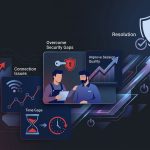

Phishing attacks have become harder to spot. Many fraudulent emails now look almost identical to legitimate business communication, especially when attackers imitate trusted companies, suppliers or internal staff members. And, small businesses are particularly exposed because they often lack dedicated cybersecurity teams or formal verification processes.
Most conversations around phishing focus on employee awareness training, and that remains important. Yet the structure of a company’s email system also plays a major role in reducing risk. Businesses using generic email accounts may appear less trustworthy to customers and easier for attackers to imitate. A custom domain creates stronger control over communication whilst helping organisations improve credibility and account security at the same time.
Generic email addresses are easier to impersonate
Attackers rely heavily on confusion and familiarity. When businesses use free email services with standard domains, fake accounts become easier to create and harder for customers or staff to recognise immediately.
A phishing email sent from a slightly altered address can easily pass unnoticed during a busy workday. One missed detail may lead to stolen credentials, fraudulent payments or unauthorised access to company systems.
Using a dedicated custom email domain helps businesses establish a more consistent and recognisable communication identity, and customers and employees become more familiar with legitimate addresses, making suspicious variations easier to detect.
Domain controls improve email authentication
Custom domains also allow businesses to use authentication protocols that help verify legitimate messages. Technologies such as SPF, DKIM and DMARC reduce the likelihood of attackers spoofing company email addresses successfully.
These protections work behind the scenes, but they play an important role in modern cybersecurity—businesses using properly configured domain settings are better positioned to block fraudulent emails before they reach inboxes.
This becomes increasingly important for organisations handling invoices, customer payments or sensitive information. Email remains one of the main targets for financial fraud because it sits at the centre of daily business communication.
Business email compromise attacks continue to rise
Compromised business email accounts have caused billions in losses globally over the last decade. These attacks often involve impersonating executives, suppliers or finance teams to trick staff into transferring money or sharing confidential information. Strengthening internal security processes and understanding how organisations can better safeguard their systems is critical, particularly when considering broader strategies around protecting digital assets in modern business environments.
According to the FBI business email compromise report, attackers continue adapting their methods to appear more convincing and bypass traditional security checks.
Smaller companies are not immune. In some cases, they are easier targets because processes are less formal and teams work quickly under pressure. A convincing fake invoice or urgent payment request can create serious financial damage within minutes.
Professional communication builds trust
Security is one side of the equation. Trust matters too. Customers, suppliers and partners are more likely to trust communication coming from a branded domain linked clearly to a legitimate business.
This becomes especially useful for remote teams, online businesses and service providers that rely heavily on digital communication. A professional email setup creates clearer separation between business activity and personal communication whilst helping organisations appear more established.
It also gives businesses greater control over account management—staff addresses can be created, removed or updated centrally instead of relying on personal accounts tied to individual employees.
Stronger email systems reduce avoidable risk
No email setup can prevent every phishing attempt. Staff training, strong passwords and multi-factor authentication still matter. Yet businesses often overlook how much their domain structure influences security in the first place.
A custom domain gives organisations more control over identity, authentication and communication standards. Those improvements make phishing attempts easier to recognise and harder to execute successfully.
For businesses looking to improve cybersecurity without adding unnecessary complexity, strengthening email infrastructure is often one of the simplest and most practical places to start.