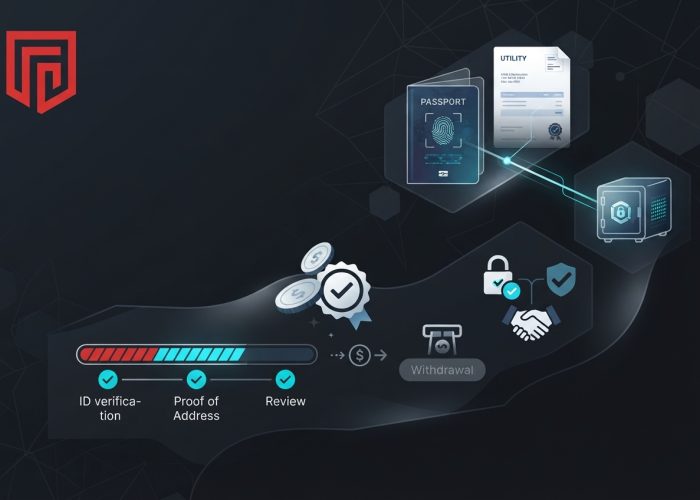
Ask for a withdrawal and a broker may suddenly want a copy of your passport and a recent utility bill. It feels like a hurdle placed right when you want your money, but the rule behind it exists for a reason.
Knowing why this check happens, and when, helps you tell a normal process from a genuine warning sign.
The short version is that the check is standard practice, required by law, and usually easy to clear once you know what to send.
What KYC Actually Means
KYC stands for know your customer. It covers the checks a broker runs to confirm who you are, usually a government issued photo ID alongside proof of your address.
These checks are not a broker’s own idea. They come from anti money laundering rules that apply to regulated financial firms in most countries.
Why Regulation Requires It
Financial regulators require firms to know who holds an account so that illegal activity, such as money laundering, can be spotted and reported. A broker moving client funds across borders sits squarely inside the kind of business these rules target.
Skipping identity checks is not an option for a properly regulated broker. Doing so risks its own license, not just a fine.
Why Withdrawal, Not Deposit
Verification often lands at withdrawal time rather than at signup, since the real risk regulators care about is money leaving the system, not entering it. A broker needs to confirm that funds go back to the same person who deposited them, not to someone who gained access to the account another way.
This timing also protects you. It stops someone else from opening an account in your name, depositing stolen funds, and pulling them straight back out through a withdrawal.
What Documents Get Requested
Most brokers ask for the same core set of documents:
- A government issued photo ID, such as a passport or driving license
- Proof of address, often a recent utility bill or bank statement
- In some cases, proof of where your trading funds came from
None of this is unusual for a regulated firm. Any bank or investment platform asks for something similar at some point.
Documents usually need to be current, in color, and fully visible in the photo or scan you submit. A cropped edge or a glare across the text is a common reason a check gets sent back for another try.
Larger Withdrawals Can Trigger More Checks
A bigger withdrawal, or one that looks unusual against your normal trading pattern, can bring extra questions about where the money in your account came from. This sits under the same anti money laundering rules as the basic identity check, just applied more closely.
This does not mean anything has gone wrong with your account. Firms are required to look more closely at activity that stands out, and a large sudden withdrawal is exactly the kind of thing that stands out.
What Happens If You Refuse
A regulated broker cannot process a withdrawal without completing the checks its license requires. Refusing to provide documents usually means the withdrawal simply waits, sometimes indefinitely, rather than being denied outright.
Your funds are not lost in this situation. They stay in the account until the verification is complete, since the broker still has to keep client money separate from its own.
Avoiding Delays
Upload clear, current documents when you first open an account rather than waiting for a withdrawal request to trigger the process. Anyone reading a guide on how to start forex trading for beginners should treat identity verification as part of setup, not an afterthought to deal with once profits are ready to come out.
A blurry photo, an expired document, or a name that does not match your deposit method are the most common reasons a check drags on longer than it should.
When It Signals Something Else
Genuine KYC checks apply consistently, not just the moment you ask to withdraw a profit. A firm that let you deposit and trade freely, then suddenly invents new document demands only once you try to take money out, is behaving differently from a broker following standard process.
Comparing how consistently a broker applies its checks from day one is part of judging a best forex broker before you commit any real money to an account.
Read reviews and check a broker’s own support pages for how it describes its verification process before you deposit. A clear, published process is a good sign. Vague answers or a process that only appears once money is involved is not.