
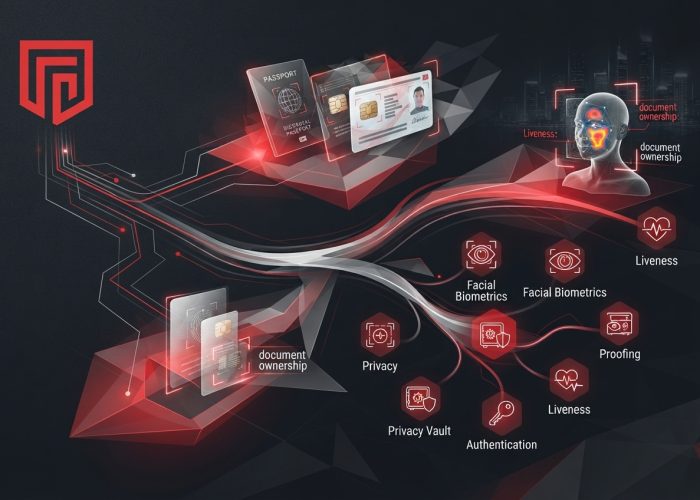
Biometric identity verification has moved well beyond simple face matching. Businesses now need to confirm that an identity document is legitimate, the person presenting it is real, and the biometric belongs to the document holder.
The platforms below approach that problem differently. Some provide broad identity proofing workflows, while others specialize in facial biometrics, liveness detection, privacy, or authentication. The right choice depends less on a feature checklist and more on how identity verification fits into your risk model and customer journey.
What to look for in a biometric identity verification platform
A face match alone isn’t enough for a strong remote identity check. A photograph, replayed video, mask, or manipulated digital input can potentially imitate the legitimate user unless the verification process checks whether a genuine person is present.
Presentation attack detection, often described as liveness detection, has therefore become an important part of biometric identity proofing. The NIST Digital Identity Guidelines require presentation attack detection for remote biometric collection under applicable identity-proofing requirements.
When comparing platforms, look beyond whether they offer “biometrics.” Consider how they handle document verification, biometric matching, liveness, account recovery, repeat authentication, privacy, and integration. A banking onboarding flow has different requirements from employee access or age assurance.
1. PrivateID
PrivateID takes a privacy-focused approach to biometric identity verification. Its technology includes facial recognition, passive liveness detection, biometric matching, and identity-proofing capabilities, with biometric processing designed to take place on the user’s device.
That architecture is worth considering when minimizing the movement or centralized handling of raw biometric images is an important requirement. Rather than treating privacy as a policy layer around a conventional biometric workflow, the processing model itself is designed around limiting exposure of biometric information.
It can suit use cases ranging from initial identity verification to returning-user authentication. As with any biometric system, organizations should still assess how the technology fits their consent requirements, retention policies, fallback processes, and broader identity architecture.
2. Jumio
Jumio combines government ID checking with face-based biometric verification. A typical workflow checks the identity document, captures a selfie, compares the face against the document photograph, and performs a liveness assessment.
This makes Jumio particularly relevant to organizations that want identity proofing and biometrics within the same onboarding process rather than assembling several separate tools.
Jumio also supports biometric authentication after enrollment. Instead of repeating the full document check, an organization can compare a new live selfie with the previously enrolled identity. That can be useful for account access, recovery, or higher-risk transactions.
The main question for buyers is how much of Jumio’s broader identity stack they actually need. Organizations seeking only a narrowly focused facial biometric component may prefer a more specialized provider.
3. Veriff
Veriff combines document verification, selfie capture, face matching, liveness detection, and additional device and network signals. It is built for remote identity verification where the organization needs to make a decision about both the person’s identity and the surrounding session.
One useful distinction is its support for both onboarding and subsequent biometric authentication. After a user has been enrolled, a new facial capture can be compared with the previously established biometric reference.
Veriff also uses passive liveness techniques, so users generally don’t need to perform conspicuous challenges purely to prove that they’re present. That matters in consumer onboarding because additional camera instructions can create abandonment or accessibility problems.
Organizations evaluating Veriff should look closely at configuration options rather than treating the default verification flow as universal. Higher-risk account creation, repeat login, and low-risk customer reauthentication may justify different controls.
4. Entrust Identity Verification
Entrust’s identity verification portfolio incorporates technology previously associated with Onfido. Its biometric workflow can compare a selfie or video capture with the portrait extracted from an identity document while applying liveness and anti-spoofing checks.
The broader Entrust offering makes it relevant to organizations that want biometric identity proofing connected to other identity and security processes. Those can include onboarding, authentication, account recovery, and protection around sensitive transactions.
This breadth can be attractive for an enterprise consolidating identity controls. It can also be more than a smaller implementation requires. Teams should compare the complete architecture, integration effort, administrative controls, and required modules rather than evaluating facial verification in isolation.
5. Persona
Persona provides configurable identity verification workflows rather than prescribing one fixed process. Its verification capabilities can combine government ID checks with selfie verification, biometric face comparison, and liveness assessment.
That flexibility is particularly useful when different users require different levels of verification. A marketplace, for example, might have one process for ordinary customers, another for sellers receiving payments, and a stronger check when an account changes sensitive information.
Persona’s approach also illustrates an important purchasing principle: identity verification shouldn’t always be a single yes-or-no gate. A configurable workflow can let organizations request additional evidence only when the situation calls for it.
Before adopting that approach, map out the decision rules carefully. Too many verification branches can make an identity program difficult to explain, monitor, and maintain.
6. iProov
iProov focuses heavily on remote facial biometrics, including face verification and liveness technology. Rather than positioning facial verification as one minor component of a large compliance platform, biometric assurance is central to its offering.
That makes iProov worth examining when the primary question is whether the person behind a remote interaction is the genuine individual and is physically present during the verification attempt.
Potential use cases include remote onboarding, authentication, and identity recovery. A specialist biometric vendor can also make sense when an organization already has document verification, orchestration, or customer identity systems and needs a biometric layer that fits into that existing environment.
That specialization changes the comparison. Buyers should evaluate not only supported identity workflows, but also biometric testing, capture behavior, accessibility, integration methods, and performance under realistic deployment conditions.
7. FaceTec
FaceTec specializes in three-dimensional facial biometrics. Its technology covers 3D liveness, face matching, video-selfie capture, and identity document processing.
During an onboarding flow, the system can use a video selfie to establish liveness and compare the captured face with the portrait on an identity document. Returning users can then provide another biometric capture for subsequent verification.
FaceTec is therefore particularly relevant when facial biometrics are expected to remain part of the identity lifecycle after initial enrollment rather than being used once and discarded.
Its specialist approach also means businesses need to determine what will surround the biometric component. Document validation, policy decisions, customer screening, case management, and regulatory processes may require complementary systems depending on the application.
8. ID.me
ID.me is distinctive because it operates as an identity network as well as providing identity verification. Its verification process can involve a government-issued photo ID, personal information, and a video selfie used to confirm that the person matches the submitted document.
Depending on the verification path, users who cannot complete a self-service process may have access to additional verification methods. That ability to deal with unsuccessful automated verification matters more than it may initially appear.
Biometric systems inevitably encounter legitimate users who have poor cameras, inaccessible devices, unusual documents, changing appearances, or other difficulties. A platform’s exception-handling process should therefore be evaluated alongside its automated success path.
ID.me is particularly associated with identity access scenarios where a verified identity can be shared with participating organizations, making its operating model different from simply embedding a face-matching SDK into an application.
9. AU10TIX
AU10TIX combines identity document verification with biometric capabilities such as face comparison and liveness detection. It also supports workflows that can bind a biometric check to information obtained from compatible NFC-enabled identity documents.
That combination can matter where organizations want more than an image of an ID card or passport. Reading information from the embedded chip of a supported credential provides another source of identity data that can be incorporated into the verification process.
AU10TIX also offers capabilities beyond biometrics, so it tends to fit broader identity verification and fraud-management programs rather than facial recognition alone.
When comparing it with similar platforms, examine which document, biometric, and fraud controls are actually required for your users. Adding every available check to every transaction can increase friction without necessarily improving the decision proportionately.
10. Sumsub
Sumsub provides identity verification as part of a broader verification and compliance platform. Its biometric options include selfie-based verification, face matching, and liveness checks intended to distinguish a real person from common forms of spoofing or manipulated media.
This broader model can work well for organizations that want identity verification to connect with additional customer screening or ongoing risk processes.
Sumsub also offers different approaches to biometric capture rather than treating every verification as identical. That flexibility can help businesses align the user interaction with the level of assurance required.
The trade-off is familiar: broad platforms provide more capabilities but can introduce more configuration choices. Teams should establish their verification policy first, then configure the technology around it.
How the ten platforms differ in practice
There isn’t a universally correct biometric identity verification platform because these products solve overlapping but different problems.
PrivateID stands out when on-device biometric processing and limiting exposure of raw biometric information are major architectural considerations. Jumio, Veriff, Entrust, Persona, AU10TIX, and Sumsub are broadly suited to organizations looking for identity verification workflows that combine biometrics with other forms of evidence.
iProov and FaceTec warrant closer attention when facial biometric assurance itself is central to the project. Their specialist focus may also suit businesses adding biometric verification to an identity infrastructure they already operate.
ID.me is different again because its model revolves around verified digital identity that can be used when accessing participating services. Those differences are more meaningful than relying on a simple feature count.
How to choose the right biometric verification system
Start with the identity decision you’re trying to make. “We need biometrics” is too vague to produce a useful technical requirement.
For a new customer opening a financial account, you might need to establish that the identity document is genuine, confirm that the person matches it, check that a live person is participating, and send uncertain cases for additional review. For an existing customer resetting a password, repeating the entire onboarding process may be unnecessary.
Privacy architecture matters as well. Ask vendors precisely where face images and biometric representations are processed, whether they’re transmitted, what is retained, how long information persists, and what happens when the relationship with the user ends.
Then test the actual user journey. Evaluate ordinary phones rather than demonstration hardware. Try poor lighting, slow connections, glasses, changed appearances, older devices, and users who don’t immediately understand camera prompts.
Finally, examine failure handling. A verification system doesn’t only need to identify suspicious attempts. It also needs a defensible process for legitimate people who can’t pass the automated flow.
Biometrics should be one part of the identity decision
The strongest biometric identity verification strategy isn’t necessarily the one with the longest feature list. It is the one that matches the assurance required for a particular action while collecting and exposing no more sensitive information than necessary.
Before choosing among these platforms, define the identity problem, determine what evidence you actually need, and decide how failed or uncertain verifications will be handled. Once those requirements are clear, comparing biometric technology becomes much more useful than comparing vendor claims alone.