Cybersecurity has become one of the defining challenges of the digital economy. As more businesses move their services online, protecting user accounts, financial transactions, and sensitive personal information has become a critical responsibility rather than an optional feature. Every successful digital platform depends on earning and maintaining user trust, and that trust is built on effective security practices.
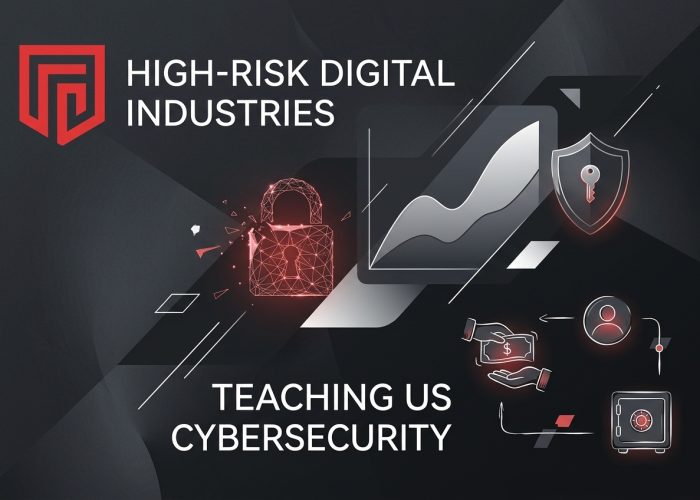
While every online business faces cyber threats, some industries operate under particularly demanding conditions. Financial institutions, payment providers, cryptocurrency exchanges, healthcare platforms, and other services handling sensitive information must constantly defend against increasingly sophisticated attacks. Their approach to cybersecurity offers valuable lessons for organizations across virtually every sector.
High-Risk Industries Often Become Security Innovators
Organizations that process financial transactions attract significant attention from cybercriminals. Because the stakes are high, these businesses frequently become early adopters of advanced security technologies designed to identify suspicious activity before it causes harm.
Modern security strategies rarely rely on a single protective measure. Instead, businesses combine encryption, behavioral analysis, identity verification, fraud detection systems, and continuous monitoring to reduce risk while maintaining a smooth user experience. The techniques developed within these high-risk sectors often influence cybersecurity standards adopted throughout the wider digital economy.
Multiple Layers Provide Better Protection
Modern cybersecurity increasingly relies on a layered approach. Passwords alone are no longer considered sufficient to protect valuable accounts. Multi-factor authentication, encrypted communications, secure payment infrastructure, device recognition, and real-time fraud monitoring all work together to create stronger defenses against unauthorized access. These technologies help businesses identify unusual activity quickly while minimizing disruption for legitimate users.
Industries that handle large volumes of financial transactions have become particularly effective at combining these measures. Banking platforms, fintech companies, payment processors, cryptocurrency exchanges, and regulated casino online services such as MrQ all invest heavily in account verification, transaction monitoring, and secure payment technologies to help safeguard customer information while maintaining efficient digital experiences.
Security Should Not Come at the Expense of Usability
One of the biggest challenges facing digital platforms is balancing security with convenience. Strong protection is essential, but overly complicated systems can frustrate users and discourage engagement.
Leading digital businesses increasingly focus on designing security measures that operate quietly in the background. Automated fraud detection, intelligent authentication, and behavioral analysis allow many threats to be identified without interrupting legitimate users.
This approach demonstrates that strong cybersecurity and positive user experience do not have to compete with one another. When implemented effectively, they reinforce each other.
Artificial Intelligence Is Transforming Threat Detection
Artificial intelligence has become an increasingly important tool in modern cybersecurity. Machine learning systems can analyze enormous volumes of data, recognize unusual behavioral patterns, and detect threats that might be difficult for traditional rule-based systems to identify.
Rather than responding only after an attack has occurred, many organizations now use predictive technologies that identify potential risks before they develop into larger security incidents.
These capabilities are particularly valuable for businesses processing thousands or even millions of digital interactions each day, where rapid analysis can significantly improve incident response times.
Cybersecurity Requires Continuous Improvement
Cyber threats evolve constantly. Techniques that were effective only a few years ago may no longer provide sufficient protection against today’s attack methods. As a result, cybersecurity has become an ongoing process rather than a one-time implementation. Organizations regularly update software, strengthen authentication systems, improve monitoring capabilities, and educate employees about emerging threats.
According to IBM Security, organizations that prioritize proactive security strategies, continuous monitoring, and rapid incident response are better positioned to reduce both the financial and operational impact of cyber incidents. Maintaining this level of vigilance often requires specialized expertise and dedicated oversight. For many regional enterprises, partnering with providers of managed IT solutions in Miami allows them to implement continuous threat monitoring and proactive infrastructure maintenance without straining internal resources. This external support helps businesses maintain compliance standards while ensuring their digital assets stay protected against evolving security threats. As cybercriminals continue refining their methods, businesses must remain equally committed to strengthening their defenses.
Strong Security Builds Long-Term Trust
For users, cybersecurity often remains invisible until something goes wrong. Successful digital platforms are those that protect sensitive information without creating unnecessary complexity for customers.
Businesses that consistently invest in security demonstrate a long-term commitment to protecting their users, strengthening confidence in their services over time. This trust has become an increasingly valuable competitive advantage as consumers become more aware of digital privacy and online risks.
Whether operating in finance, e-commerce, healthcare, online gaming, or another high-risk sector, organizations face the same fundamental challenge: protecting users while delivering reliable digital experiences.
Cybersecurity Will Remain a Competitive Advantage
As digital services continue expanding, cybersecurity will become even more central to business success. Attack methods will continue evolving, requiring organizations to adapt just as quickly through better technology, stronger processes, and ongoing investment.
The experience of high-risk industries demonstrates that effective cybersecurity is not simply about preventing attacks. It is about creating resilient digital environments where users feel confident sharing information, completing transactions, and interacting with online services. The businesses that recognize security as a long-term investment rather than a technical obligation will be the ones best prepared for the future.