
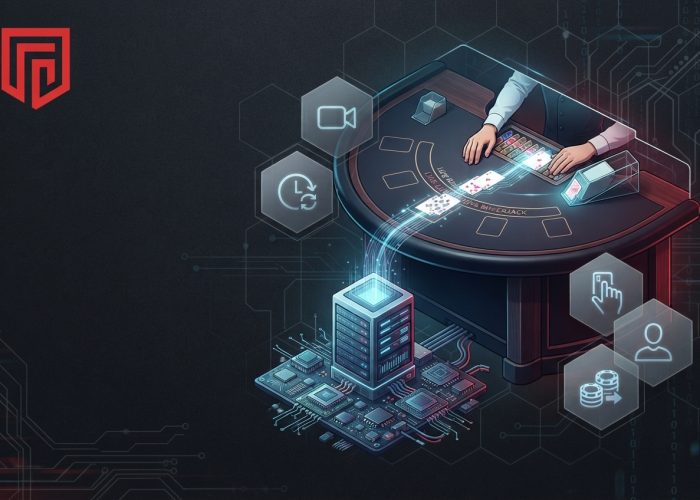
Over the past decade, live casino games became a separate niche market within the wider iGaming industry, with many players preferring them over simpler, RNG-based games. Such games closely replicate the experience of playing in a real-life casino and use human dealers to interact with players and administer the games. All leading casino sites are now offering live blackjack, poker, roulette, and a bunch of other games, complementing their core offer and drawing players who are seeking for a more humanized way to have fun.
Some players might be wondering what took so long to go in this direction. The truth is that live platforms are technically far more demanding than they look at first glance.
Basic Setup of Live Casino Games
The reason why these games are called ‘live’ is that the games are actually staged in a studio with material objects, i.e. physical cards or a roulette wheel. They are operated by dealers who act similarly to their counterparts in a traditional casino. The main difference is that the player is not physically present, but has access to this room via webcam feed. The games happen in real time, and the players make split-second decisions and see the immediate outcomes of those decisions with their own eyes. In terms of winning and losing, the results of a live blackjack game are reflected on the player’s account, so these games are fully integrated into casino platforms that are hosting them.
Running a Game Studio on a 24/7 Basis
In stark contrast to RNG simulations, live casino games require lots of hard work. The game studio is practically a mini movie set, with background scenery, actors, props… the whole nine yards. To make things more complicated, this studio needs to stay operational all day long with games broadcast without any delay. That requires a ton of advanced equipment including HD cameras covering the action from multiple angles, all of which must have optical character recognition (OCR) capacity. Each table requires a game control unit to keep track of all the collected data, while lights and sounds within the studio must be managed at a professional level. Obviously, any casino provider that wishes to cross over into the live game niche must make a considerable investment before even going online.
Translating Video Signal Into Digital Information
The connection between the studio and the players is another very sensitive area that has to be technologically secured at a high level. This connection needs to work in both directions, be 100% reliable and completely uninterrupted to enable a smooth flow of the game. Even a temporary glitch that causes the player to lose video feed for a couple of seconds or block his command can throw him off his game and spoil the experience. Since live blackjack on Powerplay and similar sites can be played for real cash, it’s also a question of integrity rather than just delivering a pleasant experience.
Handling Large Volume of Traffic During Peak Hours
Getting a live blackjack platform to work properly during testing is one thing. Ensuring it remains perfectly functional during peak hours when thousands of players from all over the world are using it is a different level of a challenge. Robust hardware and software infrastructure needed to support that kind of volume is not cheap, and it requires constant maintenance. The more successful a live casino game becomes, the more daunting those issues will become. This explains why the growth of this gaming genre is not as lightning fast as one might expect based on its popularity – the supply side is complex to build, expensive to launch, and tricky to scale.