
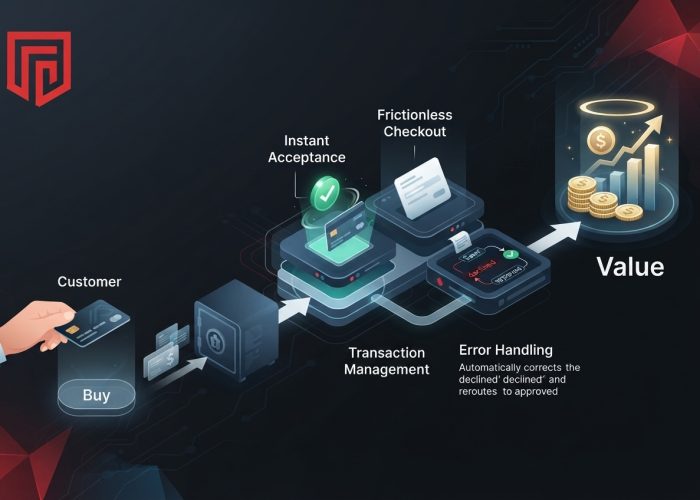
American investor and philanthropist Warren Buffett famously said, ‘Price is what you pay. Value is what you get.’ For online businesses, the value is not confined only to the product/service purchased by the customer, but to all those things that take place between clicking on ‘Buy’ and getting a payment confirmed.
Payments have become nearly instant for customers. Customers don’t want to wonder if their card is accepted; they don’t want to fill out a very long form, nor do they want to start the checkout process again just because of some error. On the other hand, companies have to worry about many other aspects of the payment processing system.
Online payment processes cannot be improved through the simple addition of another payment button. When the proper mix of technology and security in payment process management is used, it makes the payment easy for the customers as well as for your organization.
Start With Better Visibility and Control Over Payments
The simplest mistake is one of viewing payment processing as an action that just gets done in the background. The customer pays, the payment comes through, and then everyone goes their separate ways.
Instead, each payment creates information that can be valuable to you in comprehending your business. You must have knowledge about which payments have gone through, which haven’t, from which sources the chargebacks originate, and more.
A good payment dashboard
For instance, the online payment processing dashboard of Maverick Payments has been crafted in such a way that it acts as an effective toolkit for the payment requirements of businesses. Besides transaction management, the dashboard features fraud protection, which enables the identification and handling of potentially harmful activities.
A chargeback can also be managed in a digital manner with the help of real-time updates and options to react. This way, instead of being left with disorganized data, finding out about any possible fraud and chargeback activities too late, business owners will be able to track down their progress and protect their income.
Such information will be vital as the number of transactions increases. Ten transactions per day may be relatively simple to keep track of manually. However, hundreds and thousands would require something more advanced.
What’s important
A centralised dashboard can help teams answer important questions quickly:
- How many payments are being declined?
- Are chargebacks increasing?
- Which transactions require attention?
- Is unusual activity appearing in a particular area?
- Have disputes been answered on time?
- What is happening with payments right now?
The goal is to make useful information accessible enough that someone can actually act on it.
Make the Checkout Process as Simple as Possible
How many times have you given up on buying something online because the clicking through the process lasted too long? An additional unnecessary click on checkout makes it easier for customers to rethink the purchase.
Consider your checkout procedure from the standpoint of customers. They have compared products and made the decision and also chosen your company as trustworthy enough to spend some money there. Therefore, they expect the checkout procedure to facilitate the purchase and not make it harder.
- You should remove any fields that are unnecessary from the checkout. If some piece of information is not needed to process the order, deliver the goods or comply with some legal regulations, think why it needs to be filled in the checkout at all.
- Special attention should be paid to the mobile usability of the website. An efficient checkout that looks great on a big monitor can look completely awkward on the mobile device. All buttons and fields should be easy to use, the content readable and customers shouldn’t need to zoom in and out to fill payment fields.
- Instructions can also come in handy when something goes wrong. For example, an error ‘4027’ doesn’t say anything to a regular customer and he will appreciate the information on what happened.
- It is important to use the checkout process yourself sometimes to notice if there are any unnecessary elements that can prevent customers from completing the purchase.
Give Customers Appropriate Payment Choices
Naturally, not all customers want to pay the same way.
Depending on your target market and its preferences, your buyers might expect standard credit and debit cards, e-wallets, bank transactions, or some other local payment solutions.
Providing appropriate options can make paying easier, especially if you trade internationally. However, the important point is that these should be appropriate options.
Providing all payment options out there doesn’t have to be beneficial; it could make the payment form overwhelming and complicate the entire process of managing payments.
Analyze how your customers behave. What payment solutions do they choose? In what geographical areas do your customers operate? Do your mobile visitors behave differently than those who use their computers? Do your customers abandon the checkout process during the payments?
The answers could give you insights into choosing the payment methods that deserve to appear in the checkout process.
Payment strategies also evolve with time. Payment methods which were scarcely used by your customers a few years ago could become the expected one now.
Take Payment Security Seriously
Convenience is important when making payments online, but it cannot compromise security.
In any transaction, sensitive information is involved and this makes online payment processing a potential target for fraudsters. It is necessary to ensure adequate security for the information of customers as well as the business revenue.
Security requirements are dependent on a particular payment environment, type of business, volume of transactions and regulations. But there are some general recommendations.
Sensitive information used during the process of payment should be protected while transferring and storing. At the same time, access to payment management systems should be provided only to those employees who require it. An employee, who does not need to have access to sensitive information regarding financial operations, should not be provided with such access just because he works for this company.
Authentication is an additional level of protection of administrative accounts. Companies should regularly update software as well as all the integrations.
As important as that, incorporate security into standard procedures of a business.
Build Fraud Prevention Into the Payment Process
Fraud prevention may be complicated, since the companies try to achieve two goals at the same time.
You want to stop fraudulent transactions, but you don’t want legitimate customers repeatedly blocked by an overly aggressive system.
That is why successful fraud prevention is built around several signals and does not rely solely on one strict rule. In accordance with the technology a company has, it can monitor the following: transaction behaviour, unusual purchase behaviour, recurring attempts to pay, discrepancies in transaction information and so forth.
The historic data becomes especially valuable in this case.
Suppose a company notices a sudden cluster of transactions accompanied with disputes. Analyzing each transaction separately may not help, but seeing the overall picture may significantly simplify the process.
Once again, it is another aspect where transaction data aggregation becomes very important. It becomes harder to prevent frauds if valuable information is dispersed among several independent platforms.
And again, the task is to find a proper balance between control and lack of it.
Make Refunds Straightforward
There are some people who view refunds as lost revenues only. For the customers, though, the refund is part of the whole purchasing process.
If the refund process is straightforward, customers are likely to come back even if they have to get the refund back. People who spend weeks asking for a refund will not come again.
Make sure that your refund process is clearly explained where it’s available. Let the customers know who is eligible, how long they should wait for their refunds, and what they need to do.
From the inside of your organization, specify who is allowed to give the refund and record the refund process.
Refunds are linked to chargebacks. If the customer has an issue but cannot contact you and does not know about the refund process, they will use another method, like bank disputes.
In this sense, good customer service is important for chargeback prevention.
Turn Payment Processing Into a Better Customer Experience
It might be tempting to view payment processing as the last technical component of the sale process. It turns out that payment processing is located right at the point of convergence of many aspects such as customer experience, security, operational considerations, and financial management.
Efficient checkout allows customers to purchase products safely. Effective fraud prevention helps preserve revenues. Improved chargeback management eliminates unnecessary costs. Precise transaction information helps detect the problem ahead of time.
More importantly, any organization should focus on simplicity of the payment process from both sides.
The customers do not need to see how complicated everything is behind the scene. However, your team should know everything about payments that happen inside the organization.
This means that you will have to choose appropriate payment solutions, track relevant metrics, secure sensitive data, prevent fraud and manage chargebacks, and regularly review the entire process.